




Table of Contents
Salesforce multi-touch attribution is a revenue attribution framework that measures how multiple marketing and sales interactions contribute to an opportunity or closed deal. Instead of assigning credit to a single touchpoint, it distributes attribution across campaigns throughout the customer journey, helping organizations understand campaign influence, optimize marketing investments, and improve revenue reporting accuracy.
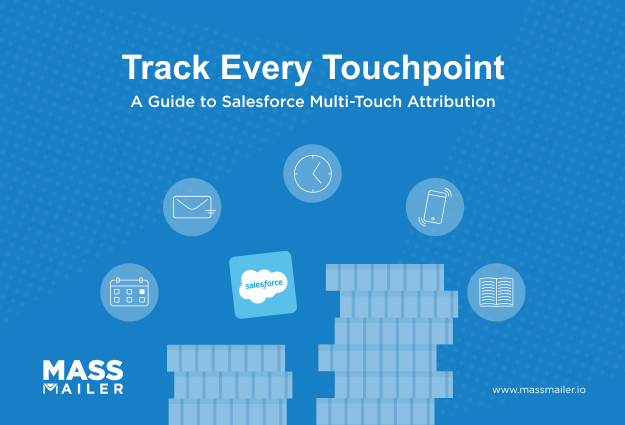
A prospect attends a webinar, clicks an email, downloads a resource, and later requests a product demo. When the deal closes, which interaction deserves the credit? Salesforce multi-touch attribution answers this question by measuring how multiple touchpoints contribute to the pipeline and revenue.
The 2025 Ad Attribution Statistics report by SHNO found that companies switching from single-touch to multi-touch attribution achieve an average 22% improvement in budget efficiency and 1.7x faster revenue growth.
By connecting campaigns to revenue, Salesforce multi-touch attribution provides a clearer view of the customer journey and the impact of each marketing interaction.
This blog explores the key components, attribution models, setup process, and best practices for improving attribution accuracy in Salesforce.
Key Components Required for Salesforce Multi-Touch Attribution
Salesforce multi-touch attribution relies on several interconnected data elements. Each component plays a specific role in connecting campaigns, contacts, opportunities, and revenue.

1. Campaign Members
Campaign Members are the foundation of attribution tracking in Salesforce. They connect leads and contacts to campaigns and create the relationship needed to track engagement throughout the customer journey.
Every time a prospect attends a webinar, downloads a whitepaper, registers for an event, or interacts with a marketing campaign, their participation can be captured through Campaign Members.
Campaign Members help organizations track:
- Campaign participation history
- Engagement status changes
- Marketing touchpoints
- Audience interaction trends
Member statuses provide additional context. For example, a webinar campaign may include statuses such as Registered, Attended, and No Show. These details create a richer picture of buyer engagement and improve attribution accuracy.
Tracking campaign participation becomes even more effective when email engagement data is captured directly within Salesforce. Solutions such as MassMailer help teams track opens, clicks, replies, and campaign interactions, creating a more complete attribution trail. Organizations using Salesforce Mass Email Marketing and Email Monitor tools can gain deeper visibility into email engagement and its impact on campaign influence.
2. Opportunity Contact Roles
Opportunity Contact Roles connect contacts directly to opportunities. This relationship is critical because attribution requires Salesforce to understand which people were involved in a deal.
Opportunity Contact Roles help answer questions such as:
- Who influenced the buying decision?
- Which contacts contributed to revenue generation?
- Which campaigns touched those contacts?
Missing Opportunity Contact Roles create major reporting challenges. Even if contacts participate in campaigns, Salesforce may struggle to connect those interactions to revenue opportunities.
Many organizations discover that attribution reporting gaps stem from inconsistent use of Opportunity Contact Roles rather than limitations within Salesforce itself.
Maintaining accurate contact records is equally important for attribution reporting. Organizations can improve data quality by following contact management best practices.
3. Campaign Influence
Salesforce Campaign Influence is the engine behind advanced attribution reporting.
Campaign Influence automatically associates campaigns with opportunities when qualifying relationships exist between campaign members and opportunity contact roles.
These influence records enable organizations to:
- Track campaign impact on revenue
- Measure pipeline contribution
- Allocate campaign credit
- Analyze customer journeys
Rather than assigning all revenue to a single campaign, Campaign Influence supports multiple campaign relationships and broader attribution analysis.
4. Primary Campaign Source
The Salesforce Primary Campaign Source identifies the campaign most closely associated with an opportunity.
Unlike Campaign Influence, Primary Campaign Source typically assigns attribution to one campaign. Salesforce can populate this field automatically during lead conversion, although users can also update it manually.
Organizations often use Primary Campaign Source for:
- Simple campaign reporting
- Lead source analysis
- Basic opportunity attribution
While useful, it provides a narrower view of the customer journey compared to multi-touch attribution approaches.
Salesforce Campaign Influence vs Primary Campaign Source
Salesforce offers two primary attribution approaches. Understanding the differences helps organizations choose the right framework for measuring campaign performance.
Comparing the Two Approaches
| Area | Primary Campaign Source | Campaign Influence |
|---|---|---|
| Campaign Credit | Single campaign | Multiple campaigns |
| Attribution Depth | Basic | Advanced |
| Revenue Visibility | Limited | Comprehensive |
| Customer Journey Tracking | Limited | Extensive |
| Setup Complexity | Lower | Higher |
| Reporting Capability | Simple | Advanced |
Primary Campaign Source works well when organizations need straightforward reporting. It is often easier to implement and requires less ongoing administration.
Campaign Influence provides a broader perspective. Instead of focusing on one campaign, it evaluates multiple interactions across the buyer journey. Organizations looking to gain deeper visibility into campaign engagement can benefit from email reporting capabilities that complement attribution analysis.
When Primary Campaign Source Makes Sense
Smaller organizations often benefit from Primary Campaign Source because:
- Sales cycles are shorter
- Marketing programs are less complex
- Attribution requirements are simpler
- Reporting needs are limited
When Campaign Influence Makes Sense
Campaign Influence becomes valuable when organizations operate across multiple channels and longer buying cycles.
It is especially useful for:
- B2B technology companies
- Enterprise sales teams
- Account-based marketing programs
- Revenue-focused marketing operations
Organizations that rely on multiple marketing touchpoints often benefit from Campaign Influence because it provides a more complete view of how campaigns contribute to pipeline creation and revenue generation.
By capturing interactions across the customer journey, teams can make more informed decisions about marketing investments and campaign performance.
Salesforce Attribution Models Explained
Attribution models determine how Salesforce distributes revenue credit across marketing touchpoints. Each model provides a different perspective on campaign performance and customer engagement.

1. Salesforce First-Touch Attribution
Salesforce first-touch attribution assigns 100% of revenue credit to the first recorded interaction between a prospect and your organization. It focuses on the touchpoint that initially introduced a prospect to your brand, helping teams understand which campaigns generate awareness and attract new leads.
For example, if a prospect first discovers your company through a webinar and later engages with several campaigns before becoming a customer, the webinar receives all attribution credit.
This model highlights the effectiveness of lead acquisition efforts but does not account for later interactions that may have influenced the buying decision.
Where It Works Best
- Lead source analysis
- Brand awareness measurement
- Top-of-funnel reporting
2. Salesforce Last-Touch Attribution
Salesforce's last-touch attribution assigns 100% of the revenue credit to the final interaction before conversion. It focuses on the touchpoint that directly precedes an opportunity or closed deal, making it useful for identifying campaigns that drive action.
For example, a prospect may attend webinars, download resources, and engage with multiple campaigns before responding to an email campaign that leads to a conversion. Tracking these email interactions through email activity can help organizations better understand which touchpoints influence conversions.
While this model provides insight into conversion drivers, it does not recognize the contribution of earlier touchpoints that helped nurture the prospect.
Where It Works Best
- Conversion analysis
- Bottom-of-funnel reporting
- Sales acceleration measurement
3. Even-Distribution Attribution
Even-distribution attribution, also known as linear attribution, assigns equal revenue credit to every recorded touchpoint in the customer journey. Instead of prioritizing a single interaction, it recognizes the collective contribution of all campaigns involved.
For example, if four campaigns influenced a closed opportunity, each campaign receives 25% of the attribution credit.
This model provides a balanced view of campaign performance and helps organizations evaluate the overall impact of their marketing efforts.
Where It Works Best
- Multi-channel marketing analysis
- Balanced attribution reporting
- Campaign contribution measurement
4. U-Shaped Attribution
U-shaped attribution assigns the majority of revenue credit to two key milestones: the first interaction and lead conversion. The remaining credit is distributed among the other touchpoints that occurred between those stages.
For example, a prospect may first engage through a paid advertisement and later become a qualified lead after attending a webinar. These two interactions receive most of the attribution credit, while the remaining touchpoints share the rest.
This model emphasizes the importance of generating awareness and converting prospects into qualified leads.
Where It Works Best
- Lead generation programs
- Demand generation initiatives
- Funnel performance analysis
5. W-Shaped Attribution
W-shaped attribution distributes revenue credit across three critical milestones: the first interaction, lead conversion, and opportunity creation. These stages often represent the most significant moments in the buying journey.
For example, a prospect may first engage through a webinar, become a qualified lead after downloading a resource, and enter the sales pipeline following a product demonstration. Each of these milestones receives a substantial share of the attribution credit.
By recognizing multiple high-impact interactions, this model provides a more complete view of how marketing and sales activities contribute to revenue generation.
Where It Works Best
- B2B revenue attribution
- Long sales-cycle analysis
- Opportunity creation reporting
- Customer journey measurement
How to Set Up Salesforce Multi-Touch Attribution
Successful Salesforce multi-touch attribution depends on accurate data, proper configuration, and consistent campaign tracking. Each step plays a critical role in ensuring that campaign influence and revenue attribution reports reflect actual customer interactions.
Step 1: Configure Campaign Influence
Campaign Influence is the foundation of Salesforce attribution. It enables Salesforce to associate campaigns with opportunities and track how marketing activities contribute to the pipeline and revenue.
Start by enabling Campaign Influence in Salesforce Setup. Once enabled, configure the attribution settings, activate the appropriate influence models, and define attribution timeframes that align with your sales cycle.
Consistent campaign tracking is essential for accurate attribution. Organizations using Salesforce Marketing Automation can improve campaign visibility and attribution data quality.
Step 2: Enable Opportunity Contact Roles
Organizations should make Opportunity Contact Roles a standard part of the sales process, establish clear ownership guidelines, and train users to maintain accurate records.
Consistent adoption helps Salesforce correctly associate campaign engagement with revenue-generating opportunities.
Step 3: Track Campaign Membership
Campaign Members provide the connection between prospects and marketing campaigns. Every meaningful interaction should be captured to create a complete attribution trail.
Ensure leads and contacts are consistently added to campaigns, campaign statuses are updated regularly, and engagement activities are recorded accurately.
Complete campaign membership data improves visibility into customer journeys and strengthens attribution reporting.
Step 4: Configure Attribution Rules and Reporting
Attribution rules determine how revenue credit is assigned across campaigns. The effectiveness of attribution reporting depends on selecting models and reporting structures that support business objectives.
Configure Campaign Influence models, define revenue allocation rules, and build reports and dashboards that measure campaign performance.
Whether the goal is lead generation, pipeline creation, or revenue analysis, attribution reporting should align with the metrics that matter most to the organization.
Step 5: Validate Attribution Data
Attribution is only as reliable as the data behind it. Regularly review Campaign Influence records, verify revenue-credit allocations, and audit campaign and opportunity data to identify reporting gaps.
Monitoring engagement metrics such as opens, clicks, bounce rates, and delivery failures can also help uncover attribution issues.
Organizations can further strengthen attribution accuracy by using MassMailer Alerts to identify email performance issues that may affect campaign tracking and influence reporting. Consistent validation helps maintain reliable attribution insights and supports better marketing and revenue decisions.
Where Native Salesforce Attribution Falls Short
Native Salesforce attribution provides valuable campaign influence insights, but its effectiveness depends on data quality, campaign tracking, and consistent processes. Understanding these limitations helps organizations improve attribution accuracy and reporting reliability.
1. Data Quality Dependencies
Salesforce attribution can only analyze the data available within the platform. Missing or inaccurate records can affect attribution results and revenue reporting.
Common issues include:
- Incomplete Campaign Member records
- Missing Opportunity Contact Roles
- Duplicate leads and contacts
2. Incomplete Campaign Tracking
Attribution accuracy suffers when customer interactions are not consistently captured across campaigns and channels.
Common challenges include:
- Missing UTM parameters
- Untracked marketing touchpoints
- Inconsistent campaign naming conventions
3. Attribution Model Constraints
Different attribution models distribute revenue credit differently. Choosing the wrong model can lead to incomplete or misleading insights.
Common challenges include:
- Incorrect model selection
- Misalignment with business goals
- Attribution credit discrepancies
4. Reporting and Visibility Gaps
Native Salesforce reporting may not always provide the level of detail needed for advanced revenue analysis.
Common limitations include:
- Missing influence records
- Revenue allocation inconsistencies
- Limited engagement visibility
How Bay Club Enhanced Engagement Visibility with MassMailer
Reporting limitations often become more noticeable as marketing programs scale. Bay Club enhanced visibility into customer communications by managing email engagement directly within Salesforce using MassMailer.
This provided teams with more complete engagement data for reporting and analysis, making it easier to track customer interactions and evaluate campaign performance. Improved engagement visibility can also help organizations better understand campaign influence and uncover potential attribution gaps across the customer journey.
How to Improve Attribution Accuracy
Organizations can strengthen attribution reporting by:
- Establishing attribution governance policies
- Standardizing campaign tracking processes
- Auditing attribution data regularly
- Aligning sales and marketing teams on attribution goals
Accurate data, consistent processes, and regular reviews help improve the reliability of Salesforce attribution reporting.
Gain Deeper Attribution Insights with MassMailer
Salesforce multi-touch attribution helps organizations understand how marketing activities contribute to the pipeline and revenue. However, attribution accuracy depends on capturing engagement data across every customer touchpoint.
Email remains one of the most influential channels in the B2B buying journey. Metrics such as opens, clicks, and replies provide valuable engagement signals that strengthen attribution reporting and campaign analysis.
As a Salesforce-native solution, MassMailer helps teams connect email engagement with campaign influence through advanced email reporting, analytics, and performance tracking.
Want deeper visibility into how email campaigns influence revenue? Explore MassMailer to enhance your Salesforce attribution strategy and make more informed marketing decisions.
Frequently Asked Questions
1. How does Salesforce Campaign Influence support attribution?
2. What is the difference between first-touch and last-touch attribution?
3. Why are Opportunity Contact Roles required for attribution?
4. Which attribution model is best for B2B organizations?
5. Can Salesforce support custom attribution models?
6. What data is required for accurate Salesforce multi-touch attribution?
Start Your Free Trial Today
Experience MassMailer the easiest way to send personalized emails from Salesforce.
Related Blogs
MassMailer Resources




About the Author

Siva Devaki 
Siva Devaki is the founder of MassMailer Inc., a tool that helps Salesforce users optimize email marketing. A passionate advocate for email marketing, Siva writes and hosts podcasts on the topic, sharing insights to help businesses drive revenue and enhance customer engagement through Salesforce email automation and tracking.