

Table of Contents
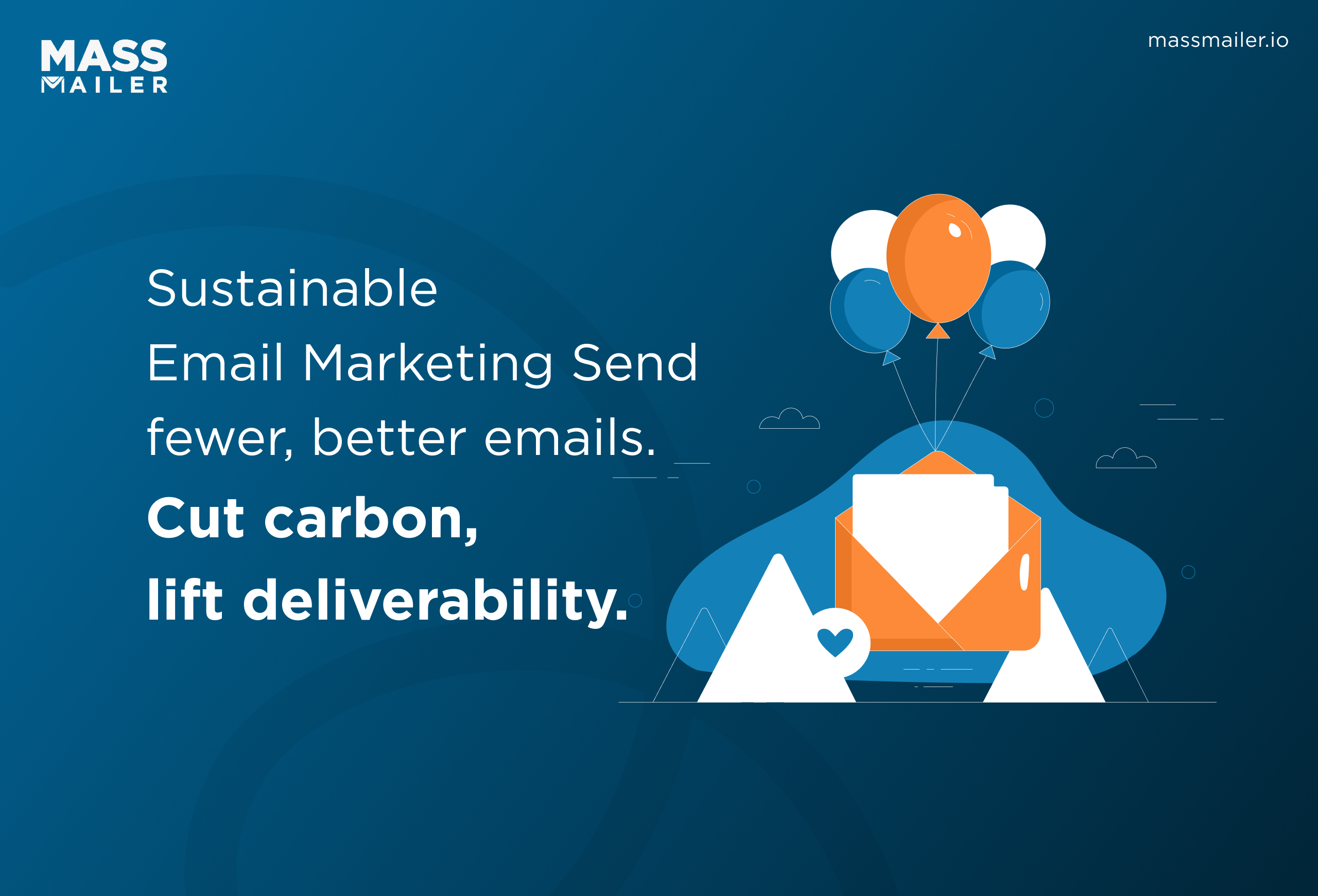
Sustainable email marketing means sending fewer, better-targeted emails so you waste less energy and protect deliverability.
- Clean and verify your list before every send, and purge hard bounces and inactive contacts.
- Segment on CRM data and cut frequency to lift engagement.
- Lighten each email by compressing images and skipping heavy attachments.
- Fix your Salesforce data: dedupe records and suppress opt-outs automatically.
Introduction
Are you sending the same campaign to your entire Salesforce list every week, then watching a chunk of it bounce or go unread? That waste sits at the center of what sustainable email marketing fixes.
Every message you send draws energy from data centers, and the ones that hit dead addresses or uninterested people draw it for nothing. Here is the useful part: the moves that shrink your environmental impact are the same ones that raise deliverability and engagement.
This guide covers what makes email marketing wasteful, the recent data on its real footprint, and the specific steps to cut pointless sends, including the CRM data most teams never check.
What is sustainable email marketing?
Sustainable email marketing is the practice of reducing the energy and waste behind your campaigns by sending fewer, more relevant emails to people who genuinely want them. The definition matters because it reframes the goal.
You are not trying to send less for its own sake. You are trying to stop sending emails that no one reads, because every one of those messages still consumes power and storage.
The mechanism is simple. Each email you send moves data through servers and data centers that run on electricity, and a large share of that electricity still comes from fossil fuels. Storage adds to it, since unread and ignored messages sit on servers for months. A bloated list and a heavy send schedule, therefore, raise both your costs and your carbon output.
This sits inside the broader set of Salesforce email marketing habits that already define a healthy program: clean data, tight targeting, and restraint. That overlap is the reason sustainable email marketing rarely forces a tradeoff. The work you do to send greener is the same work a good marketer does anyway.
The real carbon cost of email marketing
Email carries a measurable carbon cost because storing and moving it depends on data centers that draw a growing share of the world's electricity. The numbers have moved a lot in the last two years, so older "4 grams per email" framing no longer tells the full story. The pressure now comes from scale and from where that electricity is generated.
In its 2025 Energy and AI report, the IEA found that data centers used roughly 415 terawatt-hours of electricity in 2024, about 1.5% of global demand, and projected that figure will more than double to around 945 terawatt-hours by 2030. Email volume feeds directly into that curve. Radicati Group figures published on Statista in 2024 counted 361.6 billion emails sent per day, rising to 408.2 billion by 2027.
Most of that volume is not malicious. It is simply a waste, and it builds up in predictable places:
- Dead addresses: sends to contacts who left or mistyped their email, which bounce after consuming send resources.
- Disengaged recipients: people who never open, yet stay on the list and receive every campaign.
- Duplicate records: the same person emailed twice or three times from overlapping segments.
- Stored clutter: unread promotional mail that lingers on servers because no one deletes it.
Because each of those buckets maps to a fixable habit, sustainability becomes an operational question rather than a moral one. Cut the waste, and you lower both emissions and the deliverability damage that dead and disengaged contacts cause.
Clean and verify your list before every send
The fastest way to make email marketing sustainable is to stop sending to addresses that bounce or ignore you. List hygiene removes the single largest source of pointless sends. The contacts who waste energy are usually the same ones who drag down your sender reputation, which is why this belongs in every campaign cycle rather than an annual cleanup that lets decay build up for months between rounds.
Remove inactive and bounced contacts on a schedule
Start by defining "inactive" with a real threshold instead of a vague sense of who stopped engaging. A common rule works well: no opens or clicks in the last 90 to 180 days. Once you set that window, run it on every campaign cycle. Follow these steps:
- Pull contacts with zero engagement in your chosen window into a suppression segment.
- Send one short re-permission email asking whether they still want to hear from you.
- Remove anyone who does not respond, rather than carrying them forward "just in case."
- Purge hard bounces immediately, since they will never deliver and only burn resources.
This matters beyond the energy math. Mailbox providers such as Gmail and Outlook watch how recipients engage, so a list full of people who never open teaches them to route your mail to spam.
As a result, cutting dead weight protects the inbox placement of the contacts who do want to hear from you. Hard bounces deserve the same urgency. A single review of your bounce handling usually surfaces addresses that have failed for months yet still receive every send. Removing them lifts your delivered rate and clears that wasted volume from the schedule.
Verify new addresses before they enter the list
Cleaning is reactive, so pair it with verification to stop bad addresses at the door. Validate emails at the point of capture, on your signup forms, and during imports, before they ever reach a campaign. Email verification runs a few layers of checks: it confirms the syntax is valid, that the domain exists and accepts mail, and that the specific mailbox can receive messages. It also flags risky catch-all domains that accept everything but deliver little.
Each bad address you block at signup is one you never have to clean later, so verification keeps the list lean by default. The payoff compounds. You avoid the slow decay that forces bigger cleanups, you protect your reputation from spam-trap addresses that sneak in through typos, and you stop spending send resources on mail that was always going to bounce.
Segment and send fewer, better emails
Segmentation does more than any other sustainable practice to cut waste, because it lets you send less without reaching fewer of the right people. Instead of blasting one message to everyone, you split the list by real attributes and send each group only what fits its situation. Fewer total sends, higher relevance, lower footprint.
This is also where most teams have the most room to improve, since batch-and-blast is still the default in plenty of programs.
Segment on the data you already hold
Build segments from attributes that predict interest. Useful inputs include purchase history, industry, lifecycle stage, region, and past engagement, most of which already sit in your CRM. Once those segments exist, a product update goes only to users of that product, a regional event invite goes only to that region, and a renewal nudge goes only to accounts near their term.
That targeting removes the dead weight of sending offers to people who cannot act on them, which is exactly where batch-and-blast wastes most of its volume. The relevance gain matters as much as the volume cut.
A smaller, well-matched send earns higher open and click rates, and those engagement signals feed back into stronger inbox placement for your next campaign.
Cut frequency and lead with quality
Frequency is where sustainability and revenue agree most clearly. Over-sending pushes people to unsubscribe, which destroys the value of the list you worked to build. A 2024 GetApp survey found that 56% of U.S. consumers would unsubscribe after receiving four or more marketing messages from one company within 30 days. Every unsubscribe is a contact you can never reach again, so restraint here protects the audience you spent years building.
Set a cadence you can defend. For most B2B programs, that means a predictable rhythm tied to genuine news, releases, or events, instead of a weekly send by habit. Then give each a real reason to go out. Send when you have something worth a recipient's attention, and lead with the single point that matters most to that segment.
A/B testing your subject lines and send times helps each campaign pull more from a smaller number of sends, so quality compounds while your footprint shrinks.
Lighten every email you send
Reduce the weight of each message, and you reduce the data transferred and stored every time it goes out. Heavy emails packed with large images and attachments consume more energy per send than lean ones, and they load slower for the reader, who then waits or scrolls past. Trimming the payload addresses both problems.
Compress images before you add them, and lean on simpler, well-coded templates that render fast on any device. Skip large attachments where a link to a hosted file will do, since attachments multiply the stored data across every inbox you reach. When you do need to share documents at scale, a hosted approach keeps the send light.
You can also bring recipients into the effort without preaching. A short line in your footer, or a green note in your email template, can nudge readers to view rather than print, or to keep files digital. Small prompts like these cost nothing to add and reinforce that your brand takes the practice seriously.
Where the biggest waste hides: your Salesforce data
For a CRM sender, most wasted email traces back to data quality rather than campaign design. Duplicate Leads and Contacts, stale records, and a lack of engagement-based suppression mean you send more email than you should every single time. General sustainability advice skips this layer, yet it is where Salesforce teams quietly lose the most volume.
Suppress and deduplicate at the record level
Fix the data so your sends shrink automatically, instead of relying on someone to remember to filter each list. Inside Salesforce, several record-level signals already tell you who not to email:
- Email Opt Out: honor the standard opt-out field so unsubscribed contacts never enter a send.
- Bounce fields: exclude records flagged as hard-bounced rather than retrying them campaign after campaign.
- Last Activity/engagement date: suppress records with no opens or clicks past your inactivity window.
- Duplicate rules: merge duplicate Leads and Contacts so one person receives a single email instead of three.
Duplicates deserve a closer look, because they are the quiet multiplier. Set up matching rules and duplicate rules in Salesforce so the system flags a Lead and a Contact that share an email, then merge them on a schedule.
Without that, overlapping segments email the same person several times per campaign, which inflates both your volume and your annoyance factor. Run duplicate management and these suppression checks before each send, and your wasted volume drops with no change to your creative.
Engagement data only helps when it lives on the record, which is why tracking opens and clicks in Salesforce forms the foundation that makes automatic suppression possible.
Send from live CRM data instead of exported lists
Exported lists go stale the moment you download them, so they quietly reintroduce the bounces, opt-outs, and duplicates you just cleaned. A contact who unsubscribed yesterday still sits on the CSV you pulled last week. Sending from live Salesforce records avoids that drift, because every send reads the current state of the data rather than a frozen snapshot.
This is where a Salesforce-native tool earns its place. MassMailer sends campaigns directly from live Lead and Contact records, verifies addresses before they go out, and records opens, clicks, and bounces straight onto each record.
Because suppression then runs on current data, you stop emailing people who have already left or stopped engaging. That single change lowers your carbon output and your spam complaints together, and it keeps your reporting honest, since the engagement history sits on the same record your sales team already works from.
Conclusion
Sustainable email marketing comes down to one decision repeated often: send only what an engaged person actually wants. Clean and verify your list, segment instead of blast, lighten each message, and fix the CRM data that inflates your volume behind the scenes. Each step lowers your footprint while protecting the deliverability you rely on, so you rarely trade one for the other.
For Salesforce teams, the hardest part is keeping suppression running on current data. MassMailer handles that natively, sending from live records, verifying addresses, and logging engagement so your next campaign automatically skips the contacts that waste sends. Start a free MassMailer trial and run your next campaign on a leaner, cleaner list from inside Salesforce.
Frequently Asked Questions
1. How much CO2 does a single email produce?
2. What is the difference between green and sustainable email marketing?
3. Is email marketing more sustainable than direct mail?
4. Can I measure my email marketing carbon footprint?
5. Does sustainable email marketing reduce revenue?
6. How does cleaning my Salesforce data lower email emissions?
Start Your Free Trial Today
Experience MassMailer the easiest way to send personalized emails from Salesforce.
Related Blogs
B2B Email Marketing Examples That Actually Work
How to Build Salesforce Drip Campaigns That Nurture and Convert
Salesforce Mass Email: How to Enable, Send, and Scale in 2026
MassMailer Resources


About the Author

Siva Devaki 
Siva Devaki is the founder of MassMailer Inc., a tool that helps Salesforce users optimize email marketing. A passionate advocate for email marketing, Siva writes and hosts podcasts on the topic, sharing insights to help businesses drive revenue and enhance customer engagement through Salesforce email automation and tracking.