

What is Send Email in Salesforce?
Organizations rely on email for customer communications, yet Salesforce's native email sending capabilities present challenges that limit marketing effectiveness, create workflow inefficiencies, and force teams toward external solutions. Understanding available sending methods, inherent limitations, and strategic approaches ensures organizations maximize Salesforce email functionality while recognizing when enhanced platforms become necessary.
Primary Sending Methods:
Salesforce offers several email sending approaches serving different use cases. Individual emails sent via the "Send Email" button on Contact/Lead records allow personalized one-to-one communications, support HTML and plain text formats, enable attachments, and track basic send activity—but require manual effort for each recipient, making high-volume sends impractical.Mass emails through "Send List Email" functionality enable sending to up to 250 recipients per send operation with a 5,000 daily organizational limit, utilize email templates ensuring consistent messaging, and provide basic bounce tracking—but lack advanced personalization, sophisticated segmentation, or detailed engagement analytics.
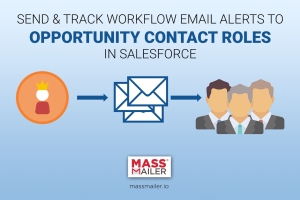
Workflow email alerts automate communications based on record changes or criteria—new Lead assignment triggers welcome email, Opportunity closed won sends thank you message, Case escalation notifies management. Automation eliminates manual sending but creates tracking gaps (alerts often skip Activity History logging) and personalization limitations (merge fields restricted to related object data).
The 5,000 Email Daily Limit:
Salesforce's most significant email sending restriction: 5,000 external emails per organization per day, regardless of user count, license type, or business size. This organizational limit (not per-user) means a 10-user organization and a 1,000-user enterprise share identical 5,000 email capacity. Organizations reaching this ceiling cannot send additional emails until the next day—no exceptions, overrides, or priority queuing.
Growing companies inevitably hit this wall. A SaaS startup with 3,000 customers sending weekly updates (3,000 emails) plus automated onboarding sequences (500 weekly), support case notifications (800 weekly), and sales outreach (1,200 weekly) totals 5,500 weekly emails—exceeding limits immediately requiring either external ESP integration or native platforms, eliminating Salesforce sending limits entirely.
Email Template Limitations:
Salesforce email templates provide reusable content but restrict customization: limited HTML editing capabilities (no drag-and-drop builders), restricted merge field options (only directly related object fields accessible), no dynamic content blocks (can't show different content based on recipient attributes), basic formatting tools compared to modern email builders, and no built-in image hosting requiring external storage. Organizations wanting sophisticated email designs—product catalogs with dynamic pricing, personalized recommendations based on purchase history, and conditional content by subscriber preferences—find standard templates insufficient.
Tracking and Reporting Gaps:
Email sends create fragmented tracking data: individual emails may log Activity History depending on user settings, mass emails provide basic delivery counts without detailed engagement, workflow alerts often skip logging entirely, click tracking shows aggregate totals without recipient-level detail, and Campaign integration requires manual association and workflow automation. Organizations want comprehensive dashboards showing sends, opens, clicks, conversions by campaign—standard Salesforce requires extensive manual reporting construction, pulling data from multiple sources.
Native Platform Advantages:
Native Salesforce email platforms eliminate sending restrictions and enhance functionality: unlimited daily sending (no 5,000 limit), advanced email builders with drag-and-drop design, dynamic content personalization, comprehensive tracking across all sending methods, automated Campaign integration, deliverability optimization (authentication, sender reputation monitoring), sophisticated segmentation tools, and real-time analytics dashboards. Organizations like the University of San Andrés managing student communications require sending flexibility beyond Salesforce limits—native platforms provide unlimited sending capacity, professional email design, complete tracking visibility, and advanced automation eliminating workarounds and external integration complexity.
Key Takeaways
- Salesforce offers multiple sending methods—individual emails (manual one-to-one), mass emails (up to 250 per send), workflow alerts (automated triggers)—each with distinct capabilities and limitations
- Critical 5,000 external email daily limit applies organization-wide regardless of user count, license type, or business size—creating a scalability ceiling for growing organizations
- Email templates provide consistency but restrict HTML customization, dynamic content, advanced personalization, and modern design capabilities compared to dedicated email builders
- Tracking fragmented across sending methods—individual emails may log Activity History, mass emails provide basic counts, workflow alerts often skip logging entirely
- Mass email restricted to 250 recipients per send with 5,000 daily organizational maximum—high-volume campaigns require multiple sends or alternative platforms
- Native platforms eliminate the 5,000 limit, provide unlimited sending, advanced design tools, comprehensive tracking, and sophisticated automation within the Salesforce ecosystem
Break free from Salesforce's 5,000 email limit. MassMailer provides unlimited email sending, advanced email builders, comprehensive tracking, and sophisticated automation—all within Salesforce. Send as many emails as your business needs without restrictions.