
Salesforce Email for Brand Awareness: Audience Segmentation, Consistent Presence & Engagement Tracking
Brand awareness email is not a campaign—it is a program with a cadence, an audience, and a cumulative effect on whether a contact not yet ready to evaluate your product will think of you first when they are. Research from the LinkedIn B2B Institute finds that 95% of B2B buyers are not in the market at any given moment. Salesforce email for brand awareness makes consistent visibility measurable by tying brand engagement to the records that show when awareness converts to pipeline.
Segmenting Brand Awareness Email Audiences from Salesforce Data
A single program cannot serve cold prospects, warm leads, and former customers simultaneously. Cold contacts need problem-education content once or twice a month. Warm contacts (MQL or early-stage opportunity) need differentiation proof points—customer outcomes, recognition, product milestones—at slightly higher frequency. Former customers (closed-lost within 24 months) need capability updates that reopen the evaluation without a win-back approach.
Building a Consistent Brand Presence Cadence
Cold contacts receive brand emails once every three to four weeks—low enough to avoid fatigue before brand equity is established. Warm contacts receive them every two to three weeks. Four content types rotate through the cadence: a perspective piece (a point of view on an audience problem), a benchmark data drop (a single relevant statistic), a customer outcome vignette (two to three sentences on what a similar customer achieved), and category validation (an AppExchange review, G2 ranking, or analyst mention). Every email ends with a low-friction CTA—never a demo request.
Creating Brand Awareness Content That Builds Recognition Without Selling
Brand awareness content builds recognition by demonstrating expertise—not promoting product features. A perspective piece leads with a specific observation, no product mention until the final sentence. A benchmark drop gives the contact something worth knowing. A customer outcome vignette paints a credible picture: a financial services team cut Salesforce email bounce rates from 8% to 1.2% in three months by making one change. Category validation lets someone else say the vendor is worth considering. Contacts should think 'this company understands my problem'—not 'this company wants to sell me something.'
Tracking Brand Awareness Engagement as a Purchase Intent Signal
Brand email engagement—opens, link clicks, and clicks to high-intent pages—is a leading indicator of evaluation intent most teams capture too late. A contact who opened seven brand emails and clicked through on three exhibits a different pattern from one who received the same emails and opened none. Three fields on the Contact capture the signal: brand email open count, weighted link click count (pricing page clicks earn more weight than blog clicks), and a composite engagement score with a recency factor. When the score crosses a threshold, create a sales task with the contact's engagement history and a conversation opener.
Personalizing Brand Awareness Emails with Account and Role Data
Account industry routes the content theme: financial services contacts receive emails about advisor communication and compliance, nonprofits about donor stewardship, education contacts about enrollment communication. Contact role routes the framing: administrators get technical depth, marketing leaders get campaign performance, executives get ROI comparisons. A single template with conditional content blocks renders the right version for each recipient—no separate campaigns per vertical-role combination needed.
Measuring Brand Awareness Email Impact on Pipeline Development
Two comparisons reveal program value. Pipeline entry rate: compare the percentage of cold-segment contacts who progressed to MQL or opportunity creation within 90 days for brand-enrolled versus same-industry, same-size contacts not enrolled—a higher rate confirms the program accelerates evaluation intent. Deal velocity: compare average days-to-close for brand-enrolled opportunities versus those with no prior brand exposure. Shorter close cycles confirm pre-opportunity awareness reduces evaluation friction. The
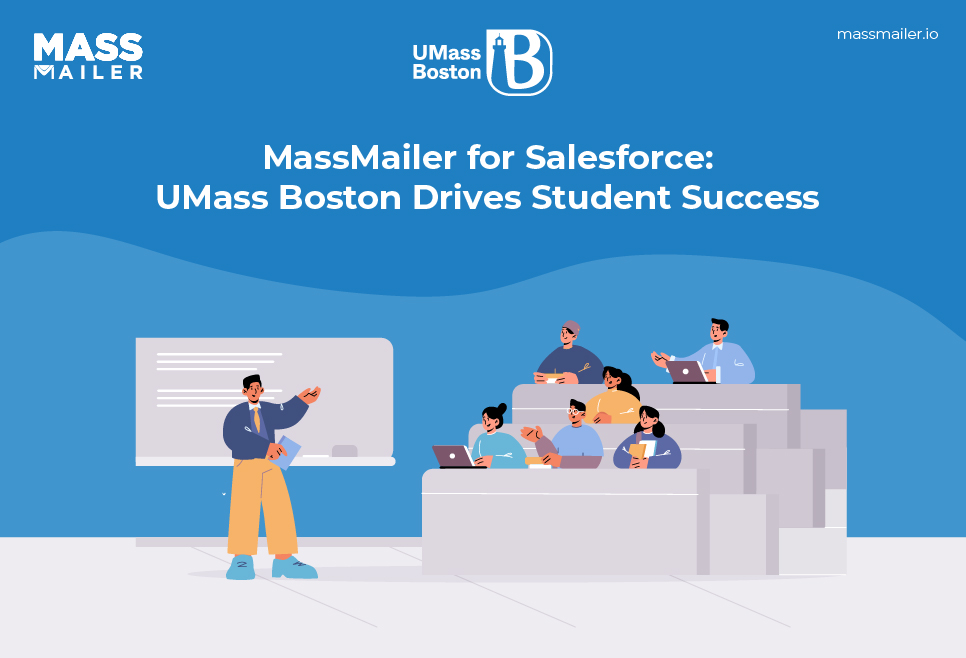
UMass Boston case study and Amerigo Education case study illustrate how consistent email programs built brand presence before a conversion event was requested.
Build Consistent Brand Presence Before Contacts Enter the Buying Cycle—CRM-Segmented Audiences, Role and Industry Personalization, Engagement Score Tracking, and Pipeline Attribution in Salesforce
MassMailer delivers brand awareness campaigns to Contact segments by lead status, industry, and opportunity stage, personalizes every send with conditional content blocks, tracks engagement on Contact records, fires alerts when scores cross evaluation-intent thresholds, and connects brand exposure to pipeline entry rate and deal velocity in native Salesforce reports. Install MassMailer from the AppExchange and make your brand visible to the 95% of buyers not yet ready to buy—so they think of you first when they are.
Key Takeaways
- Segment into three brand awareness programs: cold contacts (problem-education, once or twice monthly), warm contacts (differentiation proof points at higher frequency), and former customers (capability updates that reopen evaluation without a win-back approach).
- Rotate four content types: perspective pieces, benchmark data drops, customer outcome vignettes, and category validation. Every email ends with a low-friction CTA—never a demo request.
- Brand awareness content must demonstrate expertise, not product features. Contacts should think 'this company understands my problem'—not 'this company wants to sell me something.'
- Track engagement with three contact fields: email open count, weighted link click count, and a composite engagement score with recency weighting. Create a sales task when the score crosses the evaluation-intent threshold.
- Personalize from a single template using two conditional block layers: Account industry (routes content theme to vertical-specific applications) and Contact role (routes framing to technical depth, campaign performance, or ROI).
- Measure ROI through two comparisons: pipeline entry rate for brand-enrolled versus non-enrolled cold contacts within 90 days, and average days-to-close for opportunities with prior brand exposure versus those without.