



Lead Nurturing: Definition, Strategies & Salesforce Implementation
Most leads are not ready to buy when they first engage. Research from Demand Gen Report shows that nurtured leads produce 20% more sales opportunities than non-nurtured leads—yet the majority of marketing databases go without any structured follow-up after initial capture. The gap between a lead entering your Salesforce org and that lead converting to an opportunity is not filled by a single email. It is filled by a consistent, relevant, well-timed sequence of touchpoints that answer the prospect’s evolving questions, build trust progressively, and signal when they are ready for a sales conversation. This guide covers what lead nurturing requires structurally, how to build it inside Salesforce, and how to measure whether it is working.
What Lead Nurturing Is and Why It Matters for Salesforce Teams
Lead nurturing is the process of maintaining a relevant, ongoing conversation with a prospect from the moment they express interest until they are ready to buy—or have definitively chosen not to. The core mechanism is email: timed sequences that deliver educational content, social proof, and solution information progressively, calibrated to where the prospect is in the decision process.
The business case for nurturing is well documented. According to Forrester Research, companies with mature lead nurturing programs generate 50% more sales-ready leads at 33% lower cost per lead. The efficiency gain is structural: nurturing keeps prospects engaged during the evaluation phase so that sales conversations happen with leads who already understand the value proposition, shortening the sales cycle and improving close rates.
For Salesforce teams, nurturing requires connecting CRM data to automated sequences that trigger on lead attributes, campaign membership, or behavioral signals. The Salesforce lead nurturing glossary entry covers the CRM-specific implementation. This page focuses on the strategic foundations that apply across any email-based nurturing program, whether built natively in Salesforce or extended with AppExchange tools.
The Four Building Blocks of an Effective Lead Nurturing Program
Nurturing programs that convert prospects reliably share four structural components. These are not optional enhancements—they are the foundation that determines whether automated email sequences actually move leads through the funnel or simply accumulate engagement data without producing a pipeline.
Segmentation is the first building block. Sending the same sequence to every lead regardless of their industry, role, or engagement history produces average results at best. Segmentation divides the lead database into groups that share characteristics relevant to the nurturing message—by buyer persona, lead source, funnel stage, or industry vertical. Each segment receives sequences calibrated to its specific context, which increases relevance and reduces unsubscribes. The Salesforce email personalization glossary entry covers how to use CRM field data to personalize sequence content at the individual level beyond segment-level targeting.
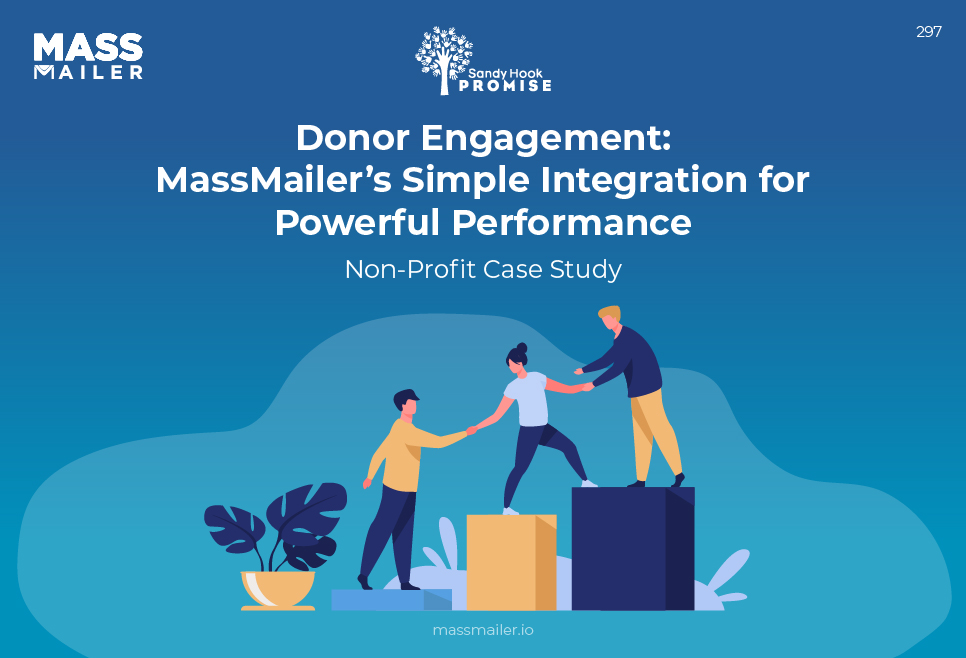
Stage-appropriate content is the second building block. Nurturing sequences fail when awareness-stage prospects receive decision-stage content—product comparisons and pricing details—before they have formed a basic understanding of the problem. Effective programs map content to funnel stages: educational content that defines the problem at awareness, comparative content that evaluates approaches at consideration, and proof-based content (case studies, ROI calculators) at decision. The Sandy Hook Promise podcast describes how a mission-driven organization structured staged communication to move different donor segments through engagement without a dedicated marketing team.
Behavioral triggers are the third building block. Time-based sequences treat all leads in a segment identically, regardless of their engagement. Behavioral triggers advance or redirect prospects based on actions: a lead who clicks a case study link receives a more sales-ready sequence than one who opened but did not click. Triggers require the email platform to write engagement data—opens, clicks, non-opens—back to Salesforce records so that automation logic can evaluate them. The Salesforce email automation glossary entry covers Flow Builder trigger configuration for engagement-based sequence branching.
Lead scoring is the fourth building block. Scoring assigns numerical values to lead attributes and behaviors—job title, company size, email opens, page visits, content downloads—and uses the cumulative score to determine when a lead crosses a threshold indicating sales readiness. Without scoring, nurturing programs have no systematic way to identify which leads have progressed enough to warrant a sales conversation, so either too many unqualified leads reach sales or too many qualified leads remain in marketing sequences past their optimal handoff moment.
Segmentation and Lead Scoring for Smarter Nurturing in Salesforce
Segmentation determines which sequence a lead enters; scoring determines when they graduate from nurturing to sales engagement. Together, they route each lead to the path most likely to produce conversion.
Salesforce provides the field infrastructure for both. Lead and Contact fields—industry, title, lead source, and account size—are the segmentation dimensions that differentiate sequences. Custom scoring fields accumulate points as leads take engagement actions: opening emails, clicking links, visiting pricing pages, and attending webinars. When the score field crosses a defined threshold, a Flow-triggered action can update the lead status to Marketing Qualified Lead (MQL) and notify the assigned sales rep, automating the marketing-to-sales handoff without manual review.
The segmentation dimensions that consistently produce the highest nurturing conversion rates are role-based (economic buyer versus technical evaluator) and engagement-based (opened at least one email in the last 14 days versus cold). Role-based segmentation allows different message framing for different stakeholders in the same organization—a dimension that matters in B2B sales cycles with multiple decision participants. Engagement-based segmentation separates active prospects who deserve accelerated sequences from cold leads who need re-engagement content before advancing.
For Salesforce teams managing large lead volumes, the Salesforce campaign management glossary entry covers how Campaign Member Status fields can serve as dynamic segmentation inputs—updating automatically based on email engagement and driving sequence logic without requiring manual list management.
Building Lead Nurturing Sequences in Salesforce
A nurturing sequence delivers emails in a defined order, at defined intervals, to a specific segment, accomplishing an objective at a specific funnel stage. In Salesforce, sequences are implemented using Flow Builder scheduled paths, Campaign-based drips, or AppExchange tools with visual sequence builders and engagement-based branching.
The foundational B2B nurturing sequence runs five to eight emails over four to six weeks. The opening establishes context. Subsequent messages deliver educational content progressively, introduce social proof at the midpoint, and close with a clear call to action. Each email should stand alone for a prospect who missed earlier messages while also building on them for those following the full sequence.
Practical sequence construction in Salesforce begins with email templates that use merge fields to pull Contact and Lead data—name, company, industry, recent activity—into each message. The Salesforce email templates glossary entry covers merge field configuration for sequence templates. Template quality is the limiting factor in most nurturing programs: well-crafted, stage-appropriate content outperforms generic emails regardless of timing or segmentation sophistication.
For teams needing sequences that branch based on engagement—advancing faster when a lead clicks a high-intent link, pausing when they unsubscribe from one category but not others—MassMailer’s native drip campaign builder for Salesforce provides visual sequence configuration inside the Salesforce org with no external ESP sync. The Salesforce email sequences glossary entry covers sequence architecture from basic Flow Builder paths to AppExchange implementations.
Measuring Lead Nurturing Performance: Metrics That Predict Pipeline
Email engagement metrics—open rate, click rate, unsubscribe rate—are the operational health indicators of a nurturing program. They reveal whether messages are reaching inboxes, whether content is compelling enough to generate clicks, and whether the program is eroding the list through irrelevant communication. But they are not the primary performance indicators of a nurturing program—they are inputs to the metrics that actually matter: lead progression and pipeline contribution.
Lead progression rate measures the percentage of leads advancing from one funnel stage to the next. A sequence with strong email engagement but poor MQL-to-SQL progression has a content alignment problem—the emails are interesting but not decision-advancing. Tracking progression by sequence and segment identifies which content and audience combinations produce pipeline movement.
Pipeline contribution measures the revenue value of opportunities where a lead-nurturing touch influenced the conversion. In Salesforce, this is configured through Campaign Influence, which attributes credit to the campaigns a lead engaged with during the nurturing journey before creating an opportunity. Without this attribution configured, nurturing programs are invisible to revenue reporting—making it impossible to defend investment or optimize allocation. The track emails in Salesforce glossary entry covers the reporting setup for tying email engagement data to campaign and opportunity attribution.
Time-to-opportunity is the third key metric: the average number of days from lead creation to opportunity creation for nurtured versus non-nurtured leads in the same segment. A shorter time-to-opportunity for nurtured leads is the clearest quantitative evidence that the nurturing program is accelerating the sales cycle—the fundamental ROI argument for the investment in sequence content, automation, and testing. The Salesforce email analytics glossary entry covers the report and dashboard configuration for tracking these pipeline-level metrics inside Salesforce.
Common Lead Nurturing Mistakes That Stall Pipeline Progress
The most common nurturing failure is a single undifferentiated sequence applied to the entire lead database. When awareness-stage and decision-stage leads receive the same emails, neither group gets appropriate content, producing high unsubscribes among early-stage leads who feel pressured and low conversion among late-stage leads who receive content they have already consumed.
The second common mistake is building nurturing sequences but failing to connect them to sales handoff logic. A nurturing program that generates MQLs but routes them to a generic sales queue—without context about which sequence the lead completed, which content they engaged with, and what their score is—loses the intelligence advantage that CRM-native nurturing provides. Every MQL handed to sales should arrive with a visible engagement history that tells the sales rep where the prospect is in their evaluation and what questions they have already had answered.
Frequency miscalibration is the third common mistake. Sequences that send too frequently trigger unsubscribes and spam complaints; sequences that send too infrequently lose prospect attention between touchpoints. The Salesforce email follow-up sequences glossary entry covers timing research and cadence optimization for follow-up sequences at different funnel stages. The RPOA case study describes how a professional association scaled nurturing across a large member database while maintaining deliverability—optimizing cadence and segment targeting to reduce unsubscribes without reducing pipeline output.
Build Salesforce-Native Lead Nurturing That Converts—Unlimited Sends, Engagement-Based Branching, and Pipeline Attribution Without Leaving Your CRM
MassMailer delivers visual drip sequence builders, behavioral triggers, merge field personalization, and real-time engagement tracking—all natively inside Salesforce with no data sync to an external ESP. Install MassMailer from the AppExchange and run your first nurturing sequence against your existing Salesforce lead data.
Key Takeaways
- Nurtured leads produce 20% more sales opportunities than non-nurtured leads. Forrester Research finds mature nurturing programs generate 50% more sales-ready leads at 33% lower cost per lead.
- Effective nurturing requires four components: audience segmentation, stage-appropriate content, behavioral triggers that advance leads based on engagement, and lead scoring that automates the marketing-to-sales handoff.
- In Salesforce, nurturing sequences use Flow Builder scheduled paths, Campaign-based drips, or AppExchange tools like MassMailer that provide visual builders with engagement-based branching—all natively inside the CRM.
- Email engagement metrics (open rate, click rate) are operational health indicators—not primary performance metrics. The metrics that predict pipeline are lead progression rate, pipeline contribution via Campaign Influence, and time-to-opportunity.
- The most common nurturing failure is a single undifferentiated sequence for all leads. Awareness-stage and decision-stage prospects require different content, pacing, and calls to action to advance toward conversion.
- Every MQL handed to sales should arrive with full engagement history from Salesforce—which sequence they completed, which content they clicked, and their current score—so the sales conversation begins with context, not repetition.