




Table of Contents
A new lead enters Salesforce with interest, but what happens next often determines whether that relationship develops or stalls. A lead nurturing drip campaign helps teams maintain consistent communication with prospects through timely messages instead of disconnected follow-ups.
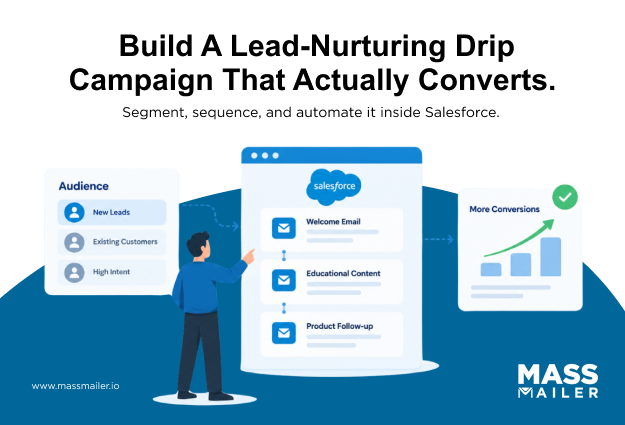
Without a clear nurture process, leads may receive generic emails, miss relevant information, or remain uncertain about the next step. Effective drip nurturing requires more than scheduled messages; it requires communication that matches each prospect’s position in the buyer journey.
This article explains how nurturing campaigns work, where drip campaigns differ from broader nurture strategies, and how Salesforce data can support more personalized communication. It also covers how teams can structure automated lead nurturing workflows that improve prospect engagement and email execution.
How a lead nurturing drip campaign guides prospects through the buyer journey
A lead nurturing drip campaign helps prospects move through the buyer journey by delivering relevant communication based on their current needs and stage. Instead of sending identical messages to every contact, nurture workflows create structured paths that support ongoing conversations.
The purpose is not simply to increase email volume. Each message should help prospects understand a challenge, evaluate possible solutions, or move closer to a decision. Educational content can support early research, while more focused communication can help prospects compare options.
Lead nurturing works best when communication follows the natural progression of a buying process. Effective lead nurturing helps businesses maintain relevant conversations with prospects as they move through the buying cycle by providing timely and useful communication.
For teams managing leads in Salesforce, maintaining context across the prospect lifecycle is important. Understandinglead nurturing helps teams create communication strategies before building more advanced workflows.
Understanding the role of automated nurture sequences in lead progression
Automated nurture sequences create consistent communication paths by sending relevant emails based on planned timing or prospect actions. They help teams continue conversations without depending on manual follow-ups after every interaction.
A strong lead nurturing email sequence delivers useful information over time. Early messages may introduce important concepts, while later emails can address more specific questions as prospects become more engaged.
The value of automated lead nurturing comes from creating a consistent experience. Instead of treating every contact the same, teams can design communication paths that support different levels of interest and readiness.
This approach helps businesses maintain engagement while giving prospects the information they need throughout their decision process.
Mapping nurture emails to different buyer journey stages
Nurture emails should match the stage a prospect has reached in their decision process. Someone exploring a problem requires different communication from someone comparing solutions or preparing for a sales conversation.
| Buyer Journey Stage | What the Nurture Email Should Do |
|---|---|
| Awareness | Educational content that helps prospects understand their challenges and explore possible approaches. Focus on providing useful information rather than pushing immediate action. |
| Evaluation | More specific communication that addresses common questions, explains solutions, or highlights relevant considerations to support stronger decision-making. |
| Sales-ready | Nurturing communication that helps maintain momentum before direct engagement. Relevant follow-ups support a smoother conversion journey and create continuity between marketing and sales. |
A well-structured nurture approach connects each email with a clear purpose. By aligning communication with the buyer journey, businesses can create more useful interactions throughout the sales funnel.
Drip campaigns vs nurture campaigns: understanding the difference
A drip campaign for leads usually follows a predefined schedule, while nurturing campaigns adapt based on prospect behaviour, engagement, and lifecycle stage.
| Factor | Drip Campaign | Nurture Campaign |
|---|---|---|
| Structure | Follows a predefined schedule | Adapts based on prospect behaviour, engagement, and lifecycle stage |
| Works well when | Recipients need similar information in a predictable order - introductory communication, educational content, or consistent follow-up messages | Prospect activity, interests, and progression vary - useful for longer buying cycles where different prospects need different information |
| Focus | Planned communication | Adapting the experience based on prospect needs, with more personalization and decision-making in the workflow |
How timing-based emails differ from behavior-driven nurture workflows
Timing-based emails follow a fixed schedule where messages are delivered at predetermined intervals. This approach works when every recipient should receive similar information in the same sequence.
Behavior-driven workflows respond to prospect actions. These actions may include engaging with content, responding to communication, or showing interest in specific topics.
Trigger events help determine when communication should change. This allows automated lead nurturing to respond to prospect behaviour instead of relying only on calendar timing.
The key difference is flexibility. Scheduled sequences follow a fixed path, while behavior-driven workflows adjust communication based on engagement signals and changing prospect needs.
Choosing nurture paths based on lead engagement signals
Engagement signals help teams determine which communication path may be appropriate for each prospect. These signals provide context around interest level, interaction history, and readiness for further conversations.
A prospect repeatedly engaging with specific content may require different communication from someone who has only shown initial interest. Recognizing these differences helps teams avoid sending the same sequence to every contact.
This is wherelead scoring can support better nurture decisions. By organizing qualification signals, teams can better understand when prospects may need additional education, targeted communication, or sales involvement.
Using engagement insights allows businesses to create more relevant nurture experiences while maintaining a consistent communication process.
How Salesforce data improves lead nurturing drip campaigns
Salesforce data helps teams create more targeted nurture campaigns by connecting prospect information with email communication. CRM data provides context that helps businesses understand who they are communicating with and what messages may be most relevant.
A nurture workflow becomes stronger when teams can use customer information, engagement history, and lifecycle details to guide communication decisions. This allows teams to move beyond generic email sequences and create more structured experiences.
CRM information can support decisions around audience selection, communication timing, and content relevance. It also helps teams maintain consistency when multiple prospects move through different nurture paths.
For businesses evaluating email execution within their CRM environment,Salesforce email marketing provides context on connecting campaign communication with existing customer information.
Using lead segmentation to create relevant nurture journeys
Lead segmentation helps teams create clearer nurture paths by grouping prospects based on relevant characteristics, interests, or lifecycle position. It prevents every contact from receiving identical communication regardless of their needs.
A drip campaign for leads becomes more effective when messages align with audience differences. A new prospect may need educational information, while an engaged contact may require content that supports evaluation.
Segmentation decisions should focus on meaningful differences between audiences. Teams can consider factors such as lead characteristics, previous interactions, and relationship stage when creating nurture paths.
The purpose of segmentation is not to create unnecessary complexity. It is to help teams deliver communication that matches the context of each prospect.
How to structure a lead nurturing workflow with automated email sequences
A strong lead nurturing workflow starts with clear planning around audience, communication goals, and the actions prospects should take next. Teams need a structured approach to create automated email sequences that provide useful information while supporting progression through the buyer journey.
The first step is defining the purpose of the workflow. Some sequences may focus on educating new prospects, while others may support evaluation or prepare qualified leads for sales conversations. Clear objectives help determine the right content, timing, and communication path.
A well-planned workflow also considers how prospects enter and move through each sequence. Teams should define their audience, identify lifecycle stages, and determine which messages support each group’s needs.
Creating a lead nurturing email sequence requires consistency without removing the human element. Automation helps maintain communication, but each email should have a clear role. Educational messages, follow-ups, and targeted content should work together as part of a connected journey.
UnderstandingSalesforce email automation can help teams evaluate how structured processes support consistent email operations and workflow management.
Defining audience segments before creating nurture sequences
Effective nurture campaigns begin with understanding the audience. Segmentation helps teams create communication paths based on relevant differences between prospects instead of sending identical messages to every contact.
For a drip campaign for leads, segments can be created using factors such as lead characteristics, interests, and lifecycle position. These details help determine which communication path best matches each group.
A new prospect may need educational content, while a more engaged lead may require information that supports evaluation. Separate nurture paths allow teams to address different needs without creating unnecessary complexity.
The purpose of segmentation is to improve communication decisions. Clear audience groups help teams create more focused workflows and maintain stronger alignment between prospect needs and email content.
Creating personalized content paths for different lead stages
Personalized content paths help teams deliver communication that matches where prospects are in their decision process. The information a prospect needs during early research is different from what they need when evaluating options.
Early-stage messages may focus on education and helping prospects understand a challenge. Later communication can address specific questions, explain approaches, or support purchase considerations.
A well-structured content path supports the conversion journey by connecting each message with a clear purpose. It helps teams avoid sending unrelated information that does not reflect the prospect’s current situation.
Personalization does not require every email to be unique. It requires communication choices that consider context, timing, and the relationship between the prospect and the business.
Automating follow-ups while maintaining sales alignment
Automated follow-ups should support sales processes by keeping communication consistent and creating clearer handoff points. Automation helps teams maintain engagement while allowing sales teams to focus on prospects requiring direct interaction.
A nurture workflow should define when continued education is appropriate and when a prospect may need a different conversation. Clear alignment between teams reduces gaps in communication.
Sales alignment also depends on shared expectations around prospect progression. Marketing and sales teams should understand how engagement patterns influence follow-up decisions.
By connecting automated follow-ups with sales goals, businesses can create a smoother experience throughout the sales funnel. This supports ongoing prospect engagement while maintaining consistency across communication efforts.
Measuring and optimizing lead nurture email sequences
A lead nurture email campaign requires ongoing review to understand whether communication is supporting prospect progression. Measuring results helps teams identify where engagement is strong and where sequence improvements may be needed.
Teams can evaluate nurture campaigns by reviewing email interactions, responses, and movement through different stages of the customer journey. These insights help businesses refine content, timing, and workflow decisions.
Measurement should focus on understanding patterns rather than making assumptions from individual actions. A sequence that performs well for one audience may require adjustments for another.
Optimization is an ongoing process. As teams learn more about prospect behaviour, they can refine communication while maintaining a consistent nurture experience.
Tracking engagement signals across nurture campaigns
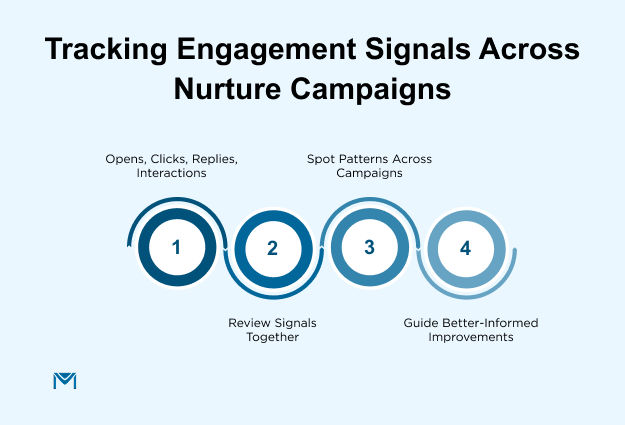
Engagement signals help teams understand how prospects interact with nurture communication. Metrics such as opens, clicks, responses, and content interactions provide visibility into how recipients engage with messages.
These signals should be reviewed together rather than treated as individual success indicators. A click may show interest, while limited interaction may suggest that messaging or timing requires adjustment.
Email tracking helps teams identify patterns across nurture campaigns. Reviewing these patterns allows marketers to improve communication decisions without relying only on assumptions.
The purpose of tracking is to create better-informed improvements throughout the nurture process.
Improving nurture workflows through testing and refinement
Nurture workflows improve when teams review results and make focused adjustments. Refinement may include updating email content, adjusting timing, or changing communication decisions based on observed patterns.
Testing different approaches helps teams understand what better supports prospect needs. Teams may refine educational messages, follow-up timing, or calls to action based on engagement behaviour.
Effective automated lead nurturing requires ongoing attention because audience needs and business priorities can change. Regular reviews help ensure sequences remain useful and aligned with communication goals.
Gradual improvements help teams maintain consistent communication while creating stronger experiences for prospects.
How to improve lead nurturing email execution
To improve lead nurturing email execution, teams need consistent templates, reliable tracking, and communication processes that keep every message relevant throughout the prospect journey.
As nurture sequences grow, maintaining quality becomes more challenging. Teams need clear processes for managing email templates, reviewing engagement activity, and ensuring follow-up messages match the intended audience and lifecycle stage.
Connected email workflows help businesses manage communication more consistently by linking campaign activity with customer information and existing processes.
The goal is not simply to automate more emails. It is to create a reliable process where templates, tracking, and workflow decisions work together to support better prospect communication.
Managing email templates, tracking, and workflow consistency
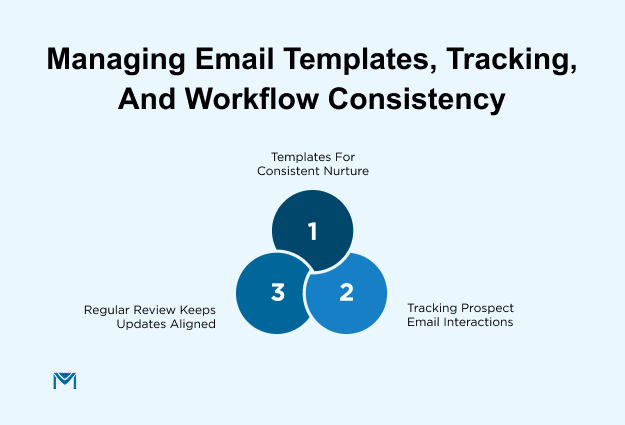
- Templates: Help teams maintain consistency across nurture sequences while allowing messages to adapt for different audiences and situations. A structured approach reduces repetitive work and improves communication quality.
- Tracking: Provides visibility into how prospects interact with emails after they are sent, helping teams identify where communication may need refinement.
- Consistency: Requires regular review to ensure templates remain accurate, communication paths remain relevant, and updates are reflected across active sequences.
Improving deliverability for automated nurture campaigns
Email deliverability influences whether nurture communication reaches intended recipients. Reliable delivery depends on factors such as accurate recipient information, responsible sending practices, and maintaining quality email content.
Following established sender requirements, such as those outlined inGoogle’s email sender guidelines, helps teams maintain reliable email communication practices.
Poor delivery outcomes can reduce the effectiveness of otherwise well-planned communication. Teams should review delivery patterns and address issues that may affect message visibility.
For automated nurture campaigns, deliverability should remain part of the broader execution process. Reliable email operations provide a stronger foundation for maintaining consistent prospect communication.
Start Your Next Lead Nurturing Sequence With the Right Foundation
A successful lead nurturing drip campaign depends on connected workflows, relevant communication, and continuous improvement throughout the buyer journey. When nurture sequences align with prospect needs, teams can create stronger interactions and support movement through the sales funnel.
Using customer data, automation, and consistent email execution helps businesses maintain communication quality while improving prospect engagement. A structured approach combines audience understanding, personalized content, and ongoing refinement to support better nurture outcomes.
For teams managing email communication within Salesforce,MassMailer’s Salesforce email marketing solution provides a way to connect email execution with existing CRM workflows.
See how MassMailer can help your team manage Salesforce email marketing workflows with greater consistency and control byscheduling a workflow discussion with MassMailer.
Frequently Asked Questions
1. How many emails should a lead nurturing drip campaign include?
2. What happens to a lead who completes a nurture sequence without responding?
3. Should a lead nurturing drip campaign stop once a lead becomes a customer?
4. Can existing leads already in Salesforce be added to a new automated nurture sequence?
5. How long should a lead nurturing drip campaign run before it's complete?
6. Does a lead nurturing drip campaign need a separate marketing automation platform outside Salesforce?
Related Blogs
How to Build a Marketing Automation Drip Campaign in Salesforce
Difference Between an Email Newsletter and Drip Campaign

MassMailer Glossary
About the Author

Siva Devaki 
Siva Devaki is the founder of MassMailer Inc., a tool that helps Salesforce users optimize email marketing. A passionate advocate for email marketing, Siva writes and hosts podcasts on the topic, sharing insights to help businesses drive revenue and enhance customer engagement through Salesforce email automation and tracking.