
Salesforce Email for Success Stories: Identifying, Requesting & Distributing Customer Wins
Prospects trust other customers more than they trust vendors. A relevant success story at the right moment converts more reliably than almost any other sales communication. The Salesforce-native approach closes three gaps: identifying which customers are in the ideal window for a participation request, sending that request at peak satisfaction, and delivering the finished story to the precise deals and renewal accounts where it will change the outcome.
Identifying Success Story Candidates from Salesforce Account Milestone and Health Fields
Building the identification logic into Salesforce Account fields automates candidate surfacing across the customer portfolio. Milestone-based identification flags an account when it reaches a usage threshold representing a meaningful, quantifiable outcome. A satisfaction filter ensures the list contains customers who are both accomplished and content. Account tier and industry prioritize candidates for specific use-case success stories.
Triggering Case Study Participation Request Emails at Peak Customer Satisfaction
Timing the request at the peak of customer satisfaction is the single most effective improvement for most successful story programs. When a customer reaches a meaningful usage milestone, that is the moment to ask. The request leads with the specific accomplishment, defines what participation requires (a 30-minute interview, draft approval, and a named quote), and offers a concrete benefit. Sending from the customer's CSM rather than a generic address consistently produces higher response rates—willingness to participate is proportional to trust in the person asking.
Delivering Success Stories to Prospects at the Right Stage of the Salesforce Sales Cycle
At the evaluation or proposal stage, the most comparable story is matched to the prospect's industry, tier, and use case, then delivered with framing that connects the featured customer's outcome to the prospect's evaluation question—as a direct answer to the problem they identified, not generic collateral. For industries where formally published stories do not yet exist, an anonymized customer reference provides the same social proof without explicit consent.
Using Success Story Email in Renewal and Expansion Conversations in Salesforce
Success stories reinforce renewals and expansions, not just new-prospect conversions. The most comparable story is matched to the renewing account by industry, tier, and use case, and delivered with framing that positions renewal as a forward-looking investment decision. For expansion conversations, the featured story comes from a customer who made the same upgrade and achieved a specific, quantified outcome at the higher tier.
Distributing Published Success Stories Through Salesforce Email Campaigns
A story actively distributed through a Salesforce email campaign reaches every prospect for whom it is relevant. Distribution targets prospects at the evaluation or proposal stage in the same industry as the featured customer. Subject lines lead with the quantified outcome rather than "New Case Study" framing—answering the evaluation question directly. A parallel internal distribution to the sales and CS team with key metrics and conversation context, ensures the field team can deploy the story without hunting for it.
Measuring Success Story Email Impact on Deal Velocity, Conversion Rate, and Advocacy
Success story email measurement connects to two outcomes: conversion rate (Closed Won rates for opportunities where a relevant story was delivered versus those where no story was shared) and deal velocity (average days-to-close comparison between the two cohorts). The
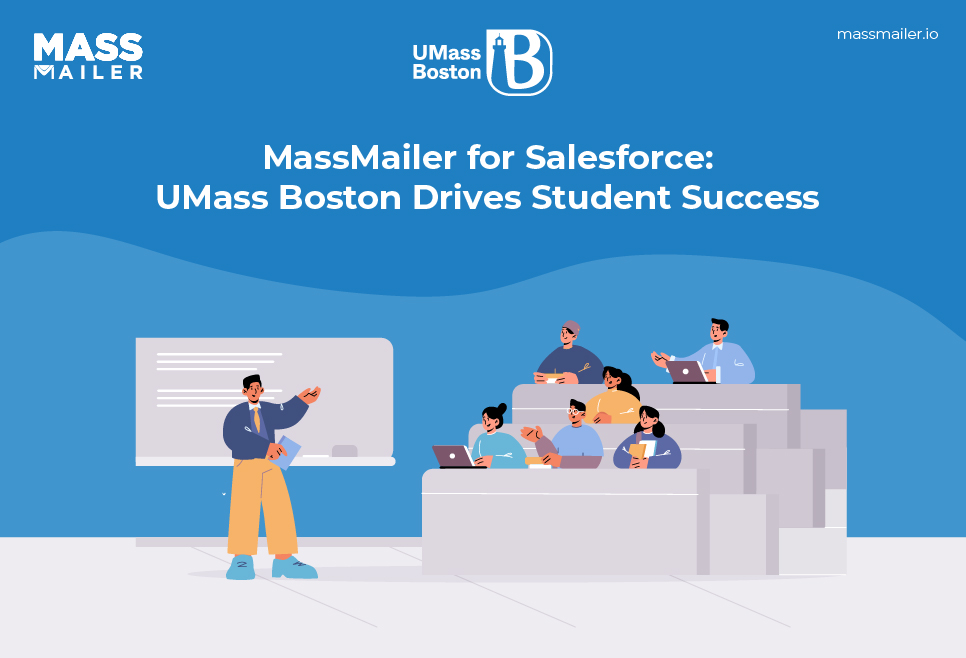
RPOA case study, UMass Boston case study, and Bay Club case study represent MassMailer success stories across nonprofit, education, and hospitality verticals—illustrating the industry-specific social proof that targeted success story email distributes to comparable prospects.
Surface Your Best Customer Wins at the Moment They Convert—Case Study Candidate Detection From Account Milestones, Participation Requests at Peak Satisfaction, and Story Distribution Matched to Active Deals in Salesforce
MassMailer identifies success story candidates from Salesforce Account milestone and health fields, triggers participation request emails from the CSM's address at peak satisfaction, and distributes published stories to the deals and renewal accounts where comparable outcomes are most persuasive. Schedule a call to see how success story email runs inside your Salesforce org.
Key Takeaways
- Success story candidates are identified by two criteria: a cumulative usage milestone representing a meaningful, quantifiable outcome, and a satisfaction threshold confirming the customer is accomplished and content. Account tier and industry filter candidates for specific use-case stories, creating a real-time queue without manual account research.
- Participation request emails are sent from the customer's CSM rather than a generic marketing address—willingness to participate is proportional to trust in the person asking. The request leads with the specific accomplishment that prompted it, defines what participation requires, and offers a concrete benefit: early story access, a high-authority backlink, or newsletter co-marketing.
- At the evaluation or proposal stage, the most comparable story is matched to the prospect's industry, tier, and use case, then delivered with framing that connects the featured customer's outcome to the prospect's evaluation question. Anonymized customer references serve the same function when formal published stories do not yet exist.
- Renewal emails match the most comparable story to the renewing account by industry, tier, and use case, framing renewal as a forward-looking investment. Expansion conversations pair each upgrade path with a story from a customer who made the same upgrade and achieved a specific, quantified outcome.
- External distribution targets prospects at the evaluation or proposal stage in the same industry as the featured customer. Subject lines lead with the quantified outcome. Internal distribution delivers the story to the sales and CS team with key metrics and conversation context for field deployment.
- Three metrics measure effectiveness: deal conversion rate (Closed Won rate for opportunities where a story was delivered versus those where it was not), deal velocity (average days-to-close comparison between the two cohorts), and advocacy pipeline rate (share of identified candidates who agreed to participate, tracking which request timing produces the highest case study yield).