

Salesforce Email for Lead Scoring Campaigns: Score Triggers, Nurture Sequences & MQL Handoff
A lead score climbing from 20 to 65 over three weeks signals something specific—but only if a system is responding. A score crossing the awareness threshold should trigger content that meets the lead where they are. A score approaching MQL should trigger a different sequence: one that delivers proof and alerts sales before the lead arrives cold.
Defining Lead Score Tiers and Email Campaign Trigger Thresholds in Salesforce
Three to four score tiers—each with a distinct email campaign—create a continuous nurture system from first engagement to sales-readiness. Four tiers serve most B2B contexts: Aware (initial engagement) receives problem-framing content; Evaluating (repeated engagement) receives comparison guides and ROI frameworks; Considering (high-frequency engagement, webinar or trial activity) receives customer success stories and a specialist consultation offer; MQL (sales-handoff threshold) receives the SDR notification and pre-handoff email.
Building Score-Triggered Nurture Email Sequences for Each Lead Scoring Tier in Salesforce
Each score tier requires a distinct nurture sequence, not a different send date for the same email. The Aware-tier lead needs content answering "why should I care about this problem"—not the same message as the Considering-tier lead, who has already consumed the comparison guide. Tier sequences run three emails over ten to fourteen days, progressing from problem framing to outcome evidence to a direct offer. If a lead advances to the next tier before the sequence completes, remaining steps are suppressed, and the new tier begins immediately.
Personalizing Lead Scoring Campaign Emails with Salesforce Lead and Account Profile Fields
Score-tier targeting determines which sequence a lead receives. Profile-field personalization determines how each email reads. Three profile fields drive within-tier content: role level (Administrator receives technical depth, Marketing Leader receives outcome data, Executive receives business case content), industry (vertical-specific examples and compliance-relevant use cases), and company size (SMB versus mid-market implementation stories).
Using Email Engagement to Accelerate Lead Scores in Salesforce
Email engagement—opens, clicks, replies—represents measurable intent that should increase the lead score. MassMailer writes click and open Activity records to the Lead record in real time. Different link types carry different weights: a pricing page click signals higher purchase intent than a blog article click; a scheduling link click signals direct sales intent. A reply to a nurture email has crossed a meaningfully higher threshold—it should trigger a score increment and a notification to the lead owner.
Orchestrating the MQL Handoff from Lead Scoring Email Campaign to Sales in Salesforce
The MQL handoff is where the lead scoring campaign delivers value or wastes it. A nurtured lead should arrive at the sales conversation with a rep who knows what content they engaged with and which links they clicked. When a lead reaches the MQL threshold, four actions fire simultaneously: an SDR task with the full email engagement history, a real-time internal notification, suppression of the active nurture sequence, and a pre-handoff email introducing the rep by name so the first call feels like a warm continuation.
Measuring Lead Scoring Campaign Impact on MQL Conversion Rate and Pipeline Quality
Three questions measure whether multi-tier nurture sequences produce better outcomes: are triggered emails advancing leads to MQL faster than non-nurtured leads, are campaign-nurtured MQLs converting to Opportunities at higher rates than other-source MQLs, and which content assets most correlate with score advancement? The
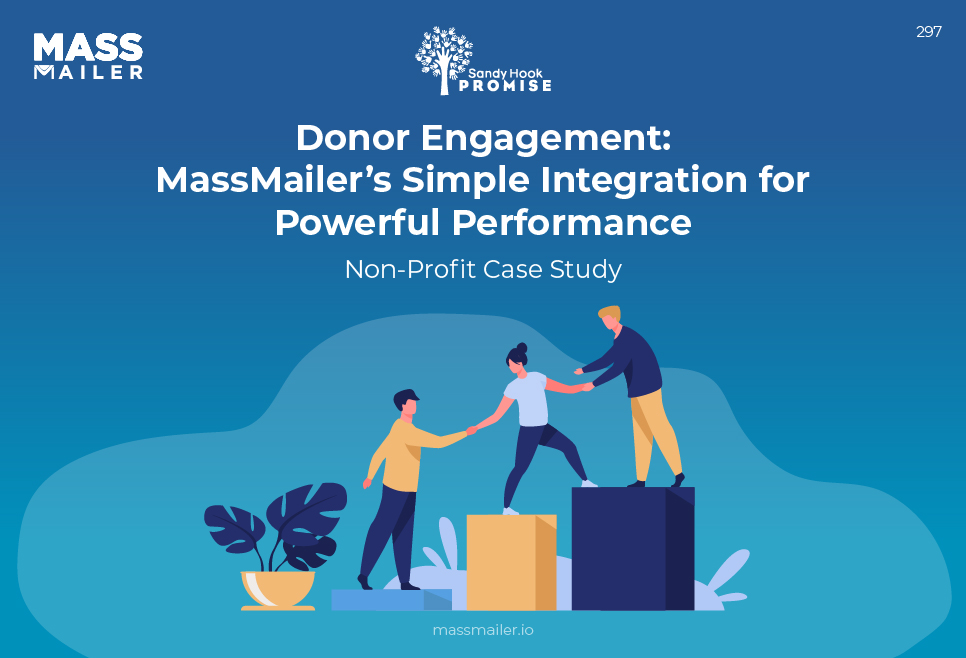
UMass Boston case study and Amerigo Education case study illustrate how CRM-native email programs improved lead-to-enrollment conversion by delivering the right content at the right stage.
Turn Every Score Threshold Into a Triggered Conversation—Score-Tier Nurture Sequences, Email Engagement Score Acceleration, Pre-Handoff MQL Emails, and SDR Context Delivery Running Natively Inside Salesforce
MassMailer triggers lead scoring emails from score tier changes, writes Activity records back to Lead records in real time, suppresses lower-tier sequences on advancement, and fires the pre-handoff MQL email alongside the SDR task. Schedule a call to see how lead scoring email campaigns run inside your Salesforce org.
Key Takeaways
- Four score tiers drive distinct email campaigns: Aware (initial engagement) receives problem-framing content; Evaluating (repeated engagement) receives comparison guides and ROI frameworks; Considering (high-frequency engagement) receives industry-matched success stories and a specialist consultation offer; MQL receives the SDR task, sequence suppression, and pre-handoff email.
- Each tier runs three emails over ten to fourteen days: problem framing, outcome evidence, and direct offer. If a lead advances to the next tier before the sequence completes, remaining steps are suppressed, and the new tier begins immediately.
- Three profile fields personalize within-tier content: role level (Administrator receives technical content, Marketing Leader receives outcome data, Executive receives business case content), industry (vertical-specific examples), and company size (SMB versus mid-market stories).
- Email engagement accelerates lead scores in real time via MassMailer Activity records. High-intent links, such as pricing pages and scheduling links, earn more points than awareness links. A reply to a nurture email should trigger a score increment and a lead owner notification.
- The MQL handoff fires four actions: an SDR task with the full email engagement history, a real-time internal notification, active nurture sequence suppression, and a pre-handoff email introducing the rep by name—converting the SDR's first call from a cold contact into a warm follow-up.
- Three measurements connect the campaign to outcomes: MQL velocity (days from creation to MQL for campaign-enrolled vs. non-enrolled leads), MQL-to-Opportunity conversion rate (campaign MQLs vs. direct-inquiry MQLs), and content-to-advancement correlation (assets appearing most in the activity history of leads who advanced tiers within seven days).