
What is Mailchimp Salesforce Integration?
Organizations using Salesforce for CRM and Mailchimp for email marketing seek integration to unite fragmented data across platforms. The Mailchimp Salesforce integration promises seamless synchronization, but implementation complexity, sync delays, and architectural limitations create challenges that native Salesforce email platforms elegantly avoid.
How Mailchimp Salesforce Integration Works:
The integration establishes bidirectional data flow between platforms:
Salesforce to Mailchimp sync sends Contact/Lead records matching specific criteria (List Views, Reports, Campaign Members) to Mailchimp audience lists, mapping Salesforce fields (First Name, Last Name, Email, Company) to Mailchimp merge fields, and updates subscriber data when Salesforce records change.
Mailchimp to Salesforce sync returns email campaign engagement data, creating or updating Salesforce Campaigns, adding campaign recipients as Campaign Members, updating Member Statuses (Sent, Opened, Clicked, Unsubscribed) based on Mailchimp engagement, and syncing unsubscribe requests to the Email Opt Out field.
The integration creates apparent unity—send a Mailchimp campaign, and engagement data automatically populates Salesforce Campaign reports. However, this synchronization occurs on scheduled intervals (typically 15-60 minutes), not in real-time, creating persistent data staleness across platforms.
The Sync Delay Problem:
Sync delays create workflow disruptions and data accuracy issues: prospect opens email at 10:00 AM showing interest, Mailchimp tracks open immediately, sync runs hourly at 11:00 AM, Salesforce Campaign report shows engagement at 11:00 AM, sales rep checking Salesforce at 10:30 AM sees no engagement, misses opportunity for timely follow-up. This 60-minute minimum lag (often longer) prevents real-time sales response to marketing engagement—the primary value proposition of marketing automation.
Membership organizations running time-sensitive event registration campaigns experience this acutely—members click the registration link, Mailchimp captures the click, but Salesforce shows no engagement for 30-60 minutes, preventing immediate follow-up calls to interested registrants while interest peaks.
Data Fragmentation and Platform Switching:
Integration doesn’t unify platforms—it synchronizes separate systems. Email content, templates, audience segments, and campaign logic all live in Mailchimp, requiring users to log into Mailchimp for email creation, design, and scheduling, manage audience lists, segments, and merge fields in Mailchimp, then switch to Salesforce to view engagement reports, update Campaigns, and analyze results. This constant platform switching creates workflow inefficiencies, training overhead (users must learn both systems), and data visibility gaps (email content not visible in Salesforce, Salesforce data not fully accessible in Mailchimp).
Configuration Complexity:
Setup requires extensive technical configuration: Field mapping between Salesforce and Mailchimp fields (manual mapping prone to errors), Sync criteria defining which Salesforce records sync to which Mailchimp audiences, Campaign association connecting Mailchimp campaigns to Salesforce Campaigns, Bidirectional sync rules preventing data conflicts and loops, Custom field synchronization for unique organizational data points, and Ongoing maintenance as field structures evolve. Many organizations underestimate configuration complexity—initial setup takes days or weeks, requires Salesforce administrator and Mailchimp expertise, and demands continuous maintenance as business needs change.
Cost Considerations:
Integration adds costs beyond Salesforce licensing: Mailchimp subscription ($20-$350+ monthly depending on subscriber count, features), Integration maintenance (administrator time, potential consultant fees), User training (teaching dual-platform workflows), and Data storage (paying for subscriber data storage in both Salesforce and Mailchimp). A mid-market organization with 10,000 contacts pays $200+ monthly for the Mailchimp Standard plan, enabling integration—annual costs exceed $2,400 before administrator time and training expenses.
Native Platform Advantages:
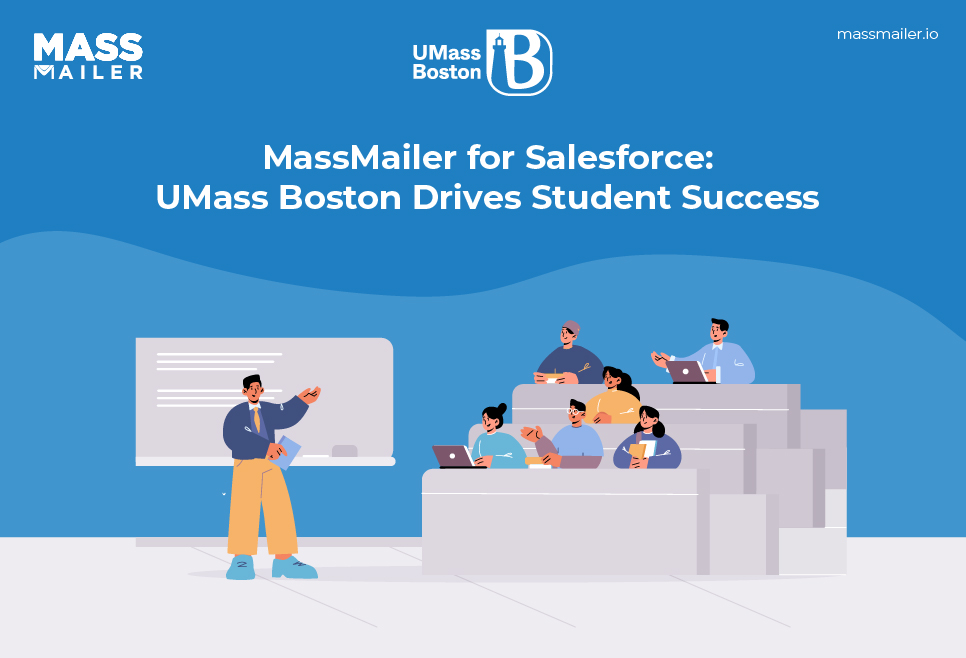
Native Salesforce email platforms eliminate integration complexity entirely: all email functionality within Salesforce (no external platform), real-time engagement data (zero sync delays), unified user experience (single login, interface, workflow), no field mapping required (direct Salesforce object access), no additional platform costs (single subscription), and complete data visibility (email content, templates, engagement all in Salesforce). Organizations like the University of Massachusetts Boston, managing alumni communications, simplified operations by replacing Mailchimp integration with a native platform—eliminating sync delays, reducing costs, unified workflows, and empowering staff with complete email marketing capabilities directly within the familiar Salesforce environment.
Key Takeaways
- Mailchimp Salesforce integration provides bidirectional sync, sending Salesforce Contacts/Leads to Mailchimp audiences and returning campaign engagement data to Salesforce Campaigns
- Sync delays (15-60 minutes minimum) prevent real-time engagement visibility, creating missed sales opportunities when prospects show immediate interest, requiring timely follow-up
- Integration maintains separate platforms requiring constant switching between Mailchimp (email creation, audience management) and Salesforce (reporting, CRM), creating workflow inefficiencies
- Configuration complexity requires extensive field mapping, sync criteria definition, Campaign association, and ongoing maintenance as business requirements evolve
- Additional costs include Mailchimp subscription ($20-$350+ monthly), administrator time, user training across dual platforms beyond Salesforce licensing expenses
- Native platforms eliminate integration entirely, providing complete email functionality within Salesforce with real-time data, unified workflows, and no external platform dependencies
Stop managing two platforms and sync delays. MassMailer provides complete email marketing within Salesforce—no integration, no sync delays, no Mailchimp subscription. Send unlimited emails with real-time engagement tracking.