



Email Solution for Salesforce CRM: Send Beyond Limits
Salesforce is where your customer data lives—so why are you sending email from somewhere else? Most CRM teams manage contacts in Salesforce but send campaigns through Mailchimp, Constant Contact, or another external platform. The result is hourly sync delays, duplicate records, fragmented reporting, and a 5,000-email daily ceiling that stops campaigns cold. A genuine email solution for Salesforce CRM operates natively inside the platform: no middleware, no API connectors, no parallel databases. This glossary entry explains what that means, why it matters, and how to evaluate whether a tool is truly native or just another connector dressed up as one.
Why Most Salesforce Teams Outgrow Native Email Limits
Salesforce imposes a 5,000-email daily organizational cap on mass sends—shared across every user, campaign, automation, and workflow in the org. A ten-person startup and a 200-person enterprise hit the same ceiling. As teams grow, that constraint becomes a scheduling problem: marketing waits on sales, sales waits on customer success, and no department gets the volume it needs.
Beyond volume, native Salesforce email offers limited tracking. Standard mass email does not capture opens or clicks out of the box. Activity History logging is inconsistent across sending methods. Email alerts triggered by Flows often bypass the Activity Timeline entirely. Teams that want open rates, click maps, and per-recipient engagement data quickly discover that built-in Salesforce reporting cannot provide it.
The instinctive response is to bolt on an external ESP. That creates a different problem: two customer databases that must stay in sync, an integration that fails silently, and compliance risk when opt-out updates travel on a 24-hour delay. According to Salesforce's AppExchange documentation, native apps avoid this entirely by storing all data within the Salesforce org from day one.
What Makes an Email Solution Truly Native to Salesforce CRM
The word "native" is overused in marketing copy. A genuinely native email solution must satisfy three technical criteria: it installs directly from the Salesforce AppExchange, it stores all data—contacts, campaigns, templates, engagement metrics—inside your Salesforce org as standard or custom objects, and it executes sends using Salesforce's own infrastructure without routing traffic through an external platform.
If a tool requires you to create an account on a separate website, export a CSV to seed a subscriber list, or wait for a sync job to update opt-out status, it is not native. It is a connector. Connectors carry real costs: setup time, ongoing maintenance, API call consumption, sync latency, and the operational overhead of managing two platforms for one job.
Genuinely native solutions surface email engagement directly on Lead, Contact, Account, and Opportunity records. Sales reps see whether a contact opened last week's campaign before they pick up the phone. Managers run email analytics in the same Salesforce reports they use for the pipeline. No switching tabs, no exporting data, no reconciling numbers from two different dashboards.
Key Capabilities to Demand from Any Salesforce Email Solution
Not every AppExchange email app delivers the same depth. When evaluating options, look for these six capabilities:
- Unlimited or high-volume sending: The solution must break the 5,000-email ceiling, not just work within it.
- Built-in email tracking: Opens, clicks, bounces, and unsubscribes are logged as Salesforce Activity records in real time.
- Custom object support: The ability to send to any Salesforce object—not only Contacts and Leads—so custom data models are fully supported.
- Drag-and-drop email template builder: Professional, mobile-responsive templates without requiring HTML or developer resources.
- Email verification: Built-in list hygiene that identifies invalid addresses before a send, protecting sender reputation and deliverability.
- Native email automation: Drip sequences, follow-up triggers, and scheduled sends configured inside Salesforce Flow or the app's own scheduler—not a third-party workflow engine.
Solutions that meet all six criteria eliminate the primary reasons teams turn to external ESPs. For a broader evaluation framework, Salesforce Trailhead's email marketing module is a useful reference for understanding what the platform can and cannot do on its own.
Native Salesforce Email vs. External ESP Integration: The Real Tradeoff
External ESPs offer polished interfaces and large template libraries—but they operate outside Salesforce. Every send, open, click, and unsubscribe must travel across an API to update CRM records. This architecture creates five structural problems that no amount of middleware engineering fully solves.
First, sync latency. Even the fastest integrations batch-process updates every 15 to 60 minutes. An opt-out processed at 9:05 AM may not reach Salesforce until 10:00 AM, during which time a sales rep might manually email that contact. Second, API consumption. Sync jobs compete with every other integration in the org for the daily API call allocation. Heavy email activity can starve other critical workflows. Third, duplicate contacts. Mismatched email addresses between platforms—different capitalization, trailing spaces, aliased domains—generate duplicate records that degrade CRM quality over time.
Fourth, fragmented reporting. Campaign ROI requires connecting email engagement to Opportunity revenue. When engagement lives in Mailchimp and revenue lives in Salesforce, attribution reports require manual exports and reconciliation. Fifth, compliance risk. GDPR and CAN-SPAM require prompt opt-out honoring. Sync delays make "promptly" difficult to guarantee. Native solutions eliminate all five problems because data never leaves Salesforce in the first place. For a comparison of how this plays out in practice, see Native Salesforce Email vs. Mailchimp Integration.
How Organizations Are Replacing Their Fragmented Email Stacks
The pattern is consistent across industries: a team adopts Salesforce for CRM, layers on an external ESP for marketing email, and within 12 to 18 months finds the integration breaking under the weight of scale, compliance demands, or personnel changes. At that point, consolidation—not further integration—becomes the answer.
Opal Group, an event management firm, sent campaigns to custom Salesforce objects that external ESPs could not reach at all. After switching to a native solution, campaigns that previously required manual workarounds ran automatically against custom object data. See the Opal Group case study for the full breakdown. UMass Boston streamlined communications for over 16,000 students by centralizing email inside Salesforce, eliminating the sync complexity that had made personalized, timely outreach impossible. Details appear in the UMass Boston case study.
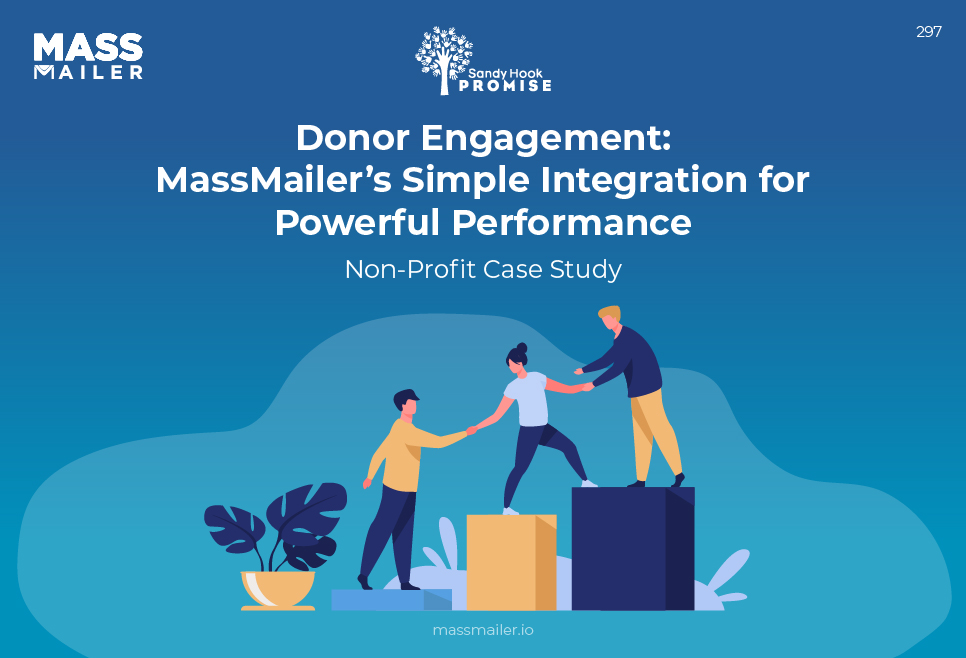
Sandy Hook Promise, a nonprofit operating on a constrained budget, needed affordable high-volume email without an enterprise-priced ESP subscription. A native Salesforce solution provided the volume and tracking they needed at a fraction of the cost. The Sandy Hook Promise podcast episode covers their migration in detail. Across all three cases, the consolidation path was the same: install a native AppExchange app, migrate templates, rebuild automations inside Salesforce, and retire the external platform entirely.
Choosing and Deploying the Right Email Solution for Your Salesforce Org
Selecting an email solution is a four-step decision. First, audit your current stack: identify every external email platform, count the number of active contacts in each, and map every integration point to Salesforce. Second, define your non-negotiables: minimum daily send volume, required object types (Contacts, Leads, custom objects), tracking depth, and compliance requirements by region.
Third, evaluate AppExchange-listed apps against your criteria—not just feature checklists from vendor websites. Request a sandbox trial. Send a test campaign to a custom object. Verify that engagement data appears on the Activity Timeline without manual configuration. Check that email templates migrate easily and that the builder produces mobile-responsive output. Review the app's approach to email verification and bounce handling.
Fourth, plan the migration in phases. Run the native solution in parallel with the external ESP for 30 days. Rebuild automations and drip sequences—see our guide to Salesforce email automation for implementation patterns. Then retire the external platform. The transition typically takes four to eight weeks and produces immediate improvements in data quality, reporting accuracy, and per-recipient cost. For implementation support, Salesforce's Email Studio documentation provides useful foundational context for how email is architected across editions.
Ready to Send Unlimited Emails Natively from Salesforce?
MassMailer is a 100% native Salesforce email solution—no middleware, no sync delays, no data leaving your org. Install it in minutes from the AppExchange and start sending beyond the 5,000-email limit today. Install MassMailer free or schedule a personalized demo to see exactly how it fits your Salesforce setup.
Key Takeaways
- Salesforce's 5,000-email daily cap is shared org-wide and does not scale with team size or sending needs.
- A truly native email solution stores all data inside Salesforce as objects—no external databases, no API sync required.
- External ESP integrations introduce sync delays, duplicate contacts, API consumption, and compliance risk that native solutions eliminate structurally.
- Evaluate solutions on six criteria: send volume, real-time tracking, custom object support, template builder quality, email verification, and native automation.
- Organizations in education, event management, and nonprofit sectors have successfully consolidated external ESPs into a single native Salesforce solution.
- Migration from an external ESP to a native solution typically takes four to eight weeks and delivers immediate gains in data quality and reporting accuracy.