

How Template Management Works Between Campaign Monitor and Salesforce
Template management between Campaign Monitor and Salesforce involves several considerations that affect how templates get built, personalized, and maintained across two separate platforms:
Templates Are Built in Campaign Monitor’s Editor Using Platform-Specific Design Tools:
Templates are built in Campaign Monitor’s editor using their design tools and drag-and-drop interface. As described in Campaign Monitor’s customer journey guide, automated email journeys rely on these templates for triggered sends—but the template creation environment is entirely separate from Salesforce, with no direct connection to your CRM data model or record structure.
Personalization Tags Pull Data Only from Synced Salesforce Fields:
Campaign Monitor merge tags pull data from synced Salesforce fields—first name, company, and custom fields that have been mapped. Personalization depends entirely on what subscriber data is available in the platform, which, for Salesforce integrations, means only data that has successfully transferred through the sync pipeline.
Only Mapped Fields Become Available for Template Personalization:
Only fields that sync from Salesforce to Campaign Monitor are available for personalization—not all Salesforce data. According to Salesforce’s formula field documentation, formula fields calculate values dynamically based on other fields, but these computed values often don’t transfer to external platforms—eliminating some of your most valuable personalization data from template use.
Templates Live in Campaign Monitor While Data Lives in Salesforce:
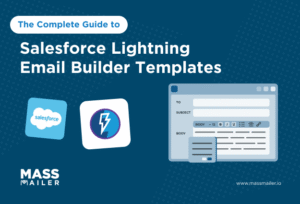
Templates live in Campaign Monitor. Salesforce doesn’t store or manage Campaign Monitor templates directly. While Salesforce Lightning Email Templates offer a native template builder with full merge field access, Campaign Monitor templates exist in a separate environment that requires CRM administrators to coordinate field availability for every personalization update.
Where Template Personalization Falls Short with Synced Data
Using Salesforce data in Campaign Monitor templates has significant limitations that constrain how deeply and accurately you can personalize email content:
Limited Field Access Restricts Personalization to Synced Data Only:
Only mapped and synced fields are available for template merge tags. Formula fields, related object data, cross-object references, and complex field types often don’t transfer cleanly to external platforms—eliminating some of your most valuable personalization data from template use.
Custom Object Data Cannot Be Used for Template Personalization:
Templates can’t be personalized with custom object fields—only synced Contact and Lead data is available. Organizations that store key customer attributes in custom objects like Membership, Enrollment, or Property records find this data completely inaccessible for Campaign Monitor template personalization.
Stale Synced Data Creates Inaccurate Personalization at Send Time:
Personalization uses synced data—if sync hasn’t run since the last data change, templates use outdated information. A contact whose title changed this morning still receives emails addressing their old role because the field update hasn’t propagated through the sync pipeline to Campaign Monitor.
Dynamic Conditional Content Based on Salesforce Data Requires Workarounds:
Complex conditional content based on Salesforce data requires workarounds or isn’t possible. Showing different content blocks based on opportunity stage, account tier, or case status demands real-time access to Salesforce data that Campaign Monitor templates simply don’t have.
Related Record Data Stays Invisible to Campaign Monitor Templates:
Account information, Opportunity data, and related records are unavailable for template personalization. Cross-object data like parent account industry, most recent opportunity amount, or open case count can’t be referenced in Campaign Monitor templates because these relationship traversals don’t survive the sync.
Two-Platform Management Adds Coordination Overhead to Every Template Change:
Templates managed in Campaign Monitor, data in Salesforce—requiring coordination between systems for every personalization update. When a new field needs to appear in templates, it must first be added to the sync configuration, mapped to a Campaign Monitor custom field, and then referenced in the template—a multi-step process spanning two platforms.
Step-by-Step Template Personalization Configuration
To use Salesforce data in Campaign Monitor templates and establish reliable personalization:
Step 1: Configure the Integration Connector
Configure Salesforce-Campaign Monitor integration via Salesforce AppExchange or middleware. Establish the connection that will enable data flow between your CRM and your email template platform.
Step 2: Map Salesforce Fields to Campaign Monitor Custom Fields
Map Salesforce fields to Campaign Monitor custom fields. Identify every field your templates will need for personalization and ensure each one has a corresponding mapped field in Campaign Monitor—unmapped fields won’t be available as merge tags.
Step 3: Sync Contacts with All Fields Required for Personalization
Sync contacts with all fields needed for personalization. Run an initial full sync and verify that field values transfer correctly—paying special attention to formula fields, picklist values, and date formats that may transform during transfer.
Step 4: Build Templates Using Available Merge Tags
Build templates in Campaign Monitor using available merge tags. The Campaign Monitor API also supports programmatic journey and template management for organizations with more complex automation requirements. Reference only fields that have been confirmed as synced and populated.
Step 5: Test Templates with Sample Contacts to Verify Personalization
Test templates with sample contacts to verify personalization works. Send test campaigns to internal recipients and confirm that every merge tag resolves correctly with actual Salesforce data—not just in Campaign Monitor’s preview mode.
Step 6: Set Up a Sync Schedule to Keep Personalization Data Current
Set up a sync schedule to keep personalization data current. Configure sync frequency to minimize the gap between Salesforce data changes and Campaign Monitor field updates—stale sync data directly impacts personalization accuracy at send time.
Operational Challenges of Managing Templates Across Two Platforms
Organizations face several challenges with template management across platforms that create ongoing friction for marketing teams:
Version Control Gaps Make Template Coordination Error-Prone:
Template versions in Campaign Monitor aren’t connected to Salesforce. Changes require manual coordination between marketing teams working in Campaign Monitor and CRM administrators managing field availability—with no automated versioning to track which template uses which synced fields.
Brand Consistency Demands Separate Management Across Both Platforms:
Maintaining consistent templates across Campaign Monitor and any Salesforce-triggered emails requires separate management. Organizations sending from both platforms must duplicate brand elements, update templates independently, and manually verify visual consistency across two different template editors.
Missing or Empty Synced Fields Produce Broken Personalization:
Templates may show blank or default values if synced fields are empty or haven’t updated. A merge tag for company name produces an awkward blank space when that field is empty in Salesforce or hasn’t synced since the record was created—requiring fallback values for every personalization tag.
Testing Requires Verifying Data Sync Before Template Previews Are Reliable:
Testing personalization requires verifying that data syncs correctly before the template preview works accurately. Campaign Monitor’s preview shows merge tags based on synced data—if that data is outdated or incomplete, the preview itself gives a misleading picture of what recipients will actually see.
How Template Limitations Undermine Email Campaign Effectiveness
Template limitations affect campaign effectiveness across personalization, automation, and analytics:
Shallow Personalization Reduces Recipient Relevance and Engagement:
Limited field access means less relevant personalization in email campaigns. Templates can’t reference recent activity, related records, or custom objects—restricting personalization to basic fields like name and company when recipients expect content tailored to their specific situation and history.
Automation and Nurture Campaigns Can’t Personalize Based on Salesforce Journey Data:
Email sending workflows and bulk email nurture campaigns can’t personalize deeply based on Salesforce journey data. A prospect at the proposal stage should receive different content than one in initial discovery—but Campaign Monitor templates lack access to opportunity stage data for this kind of contextual personalization.
Follow-Up Sequences Limited to Synced Field Personalization Only:
Email campaigns and bulk email follow-up sequences are limited to synced field personalization. Multi-step sequences that should adapt content based on evolving Salesforce data instead repeat the same static personalization across every touchpoint.
Triggered Emails Can’t Access Real-Time Salesforce Data for Personalization:
Email sending triggered by Salesforce events can’t use real-time Salesforce data for personalization in Campaign Monitor templates. A welcome email triggered when a deal closes should reference the specific product purchased and deal value—but these fields may not be available in the external template.
Template Performance Analytics Split Between Two Disconnected Platforms:
Email tracking and email analytics for template performance split between platforms. Understanding which templates drive engagement requires reconciling Campaign Monitor’s campaign metrics with Salesforce’s pipeline data—a manual process that delays optimization decisions.
Why Native Salesforce Solutions Deliver Superior Template Personalization
Native Salesforce email solutions build templates with full access to all Salesforce data—any field, any object, real-time. For a detailed comparison, see MassMailer vs Campaign Monitor.
Advantages of Platform-Native Template Management
Full Field Access Puts Every Salesforce Data Point in Your Templates:
Use any Salesforce field in templates—standard fields, custom fields, formula fields, and related object data. The full depth of your Salesforce data model is available for personalization without sync limitations or field mapping restrictions.
Custom Object Data Powers Deep Personalization for Any Record Type:
Personalize templates with data from any Salesforce object—Members, Patients, Properties, or any custom object. Native solutions treat every object equally for template personalization, eliminating the Contact/Lead-only restriction.
Real-Time Data Ensures Templates Always Use Current Information:
Templates use current Salesforce data at send time—no sync delay, always accurate personalization. A contact whose title changed five minutes ago receives an email with their current title, not the outdated value from the last sync cycle.
Single Platform Eliminates Template-Data Coordination Overhead:
Templates are stored and managed in Salesforce. No two-platform coordination required—template designers access the same data that CRM users see, eliminating the disconnect between template needs and available personalization fields.
Dynamic Conditional Content Based on Any Salesforce Criteria:
Build conditional template content based on any Salesforce criteria. Show different content blocks based on opportunity stage, account tier, geographic region, or any field value—all evaluated at send time against live data.
Drag-and-Drop Builder with Full Salesforce Merge Field Access:
Use the email builder with drag-and-drop design and full Salesforce merge field access. Build professional templates visually while accessing every field from every object in your org for personalization.
When Campaign Monitor Templates with Salesforce Data Are Sufficient
Campaign Monitor templates with Salesforce data may work when:
- Simple personalization needs are limited to basic fields like name and company
- Team expertise is primarily in Campaign Monitor, and the learning curve of switching outweighs the current limitations
- No custom object personalization required for your email campaigns
- Sync delays are acceptable for personalization accuracy at send time
However, organizations needing deep personalization, email metrics optimization, and better open rates typically achieve better email deliverability with native solutions.
Native Salesforce Solution
For organizations needing powerful template personalization, MassMailer operates 100% native to Salesforce—full data access for every template. Send mass email with deep personalization from any object. Overcome the 5,000 daily email limit while maintaining complete email capabilities. Build templates with personalization from any data source.
Key Takeaways
- Campaign Monitor templates can only be personalized with synced Salesforce fields—not full data access
- Custom objects, formula fields, and related data are unavailable for template personalization
- Native Salesforce solutions provide full field access from any object for template personalization
- Evaluate personalization depth requirements when choosing a template management approach
Ready for powerful template personalization? MassMailer delivers 100% native Salesforce email with full data access for templates. Get best-in-class capabilities without personalization limits. Respect opt-out preferences automatically.