

Table of Contents
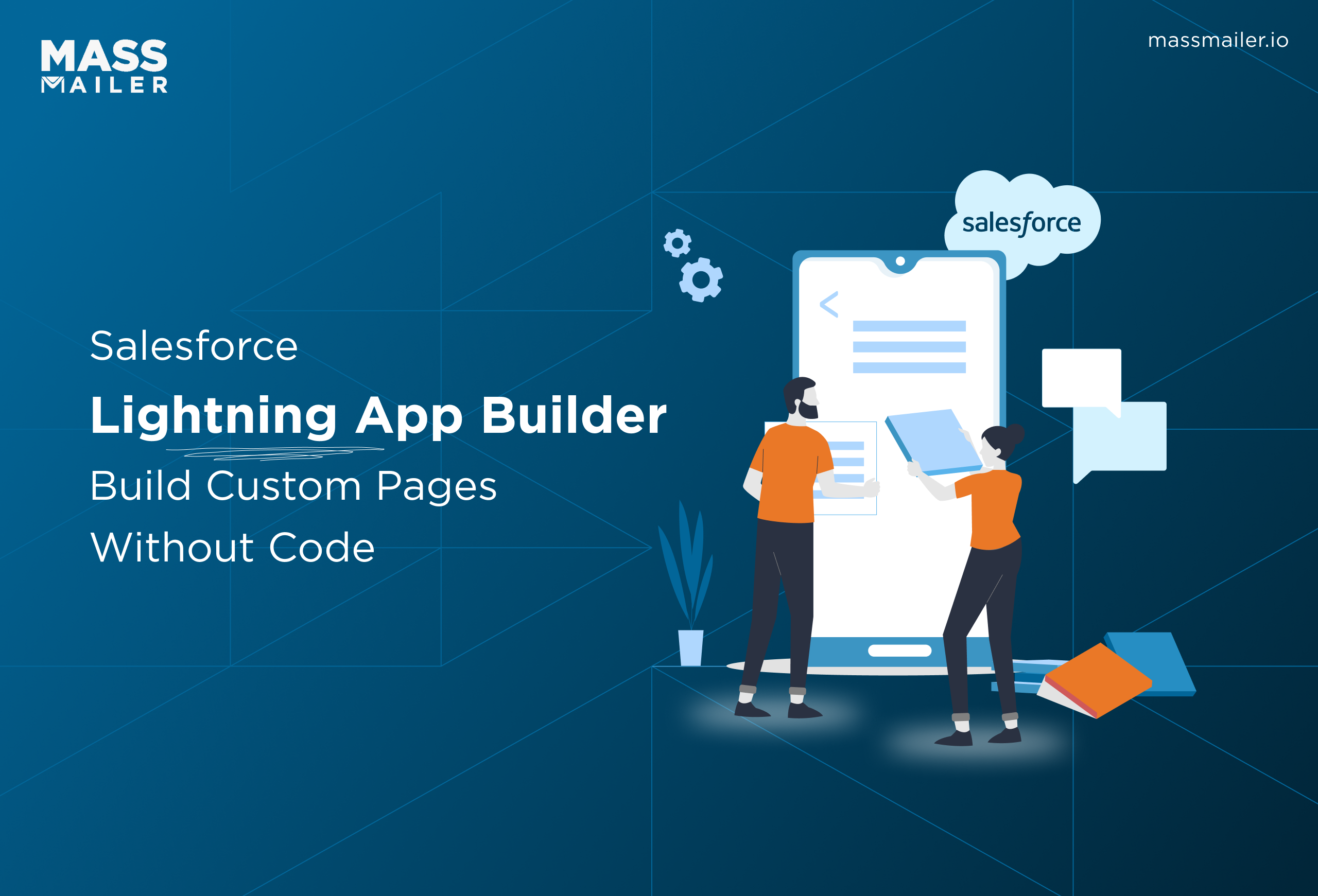
The Salesforce Lightning App Builder is a powerful low-code customization tool that enables Salesforce Admins to design dynamic interfaces using drag-and-drop components. Built for the modern Lightning Experience, it simplifies CRM personalization, improves productivity, and allows teams to create role-specific pages without complex development.
Introduction
Salesforce Lightning refers to a component-based framework for Salesforce app development. It aims to simplify the overall Salesforce app development processes for business users, especially those who do not have programming experience.
Lightning pages, in particular, offer an opportunity to create dynamic, user-centered interfaces. However, not many organizations are equipped enough to get the maximum out of it.
This post aims to explore Salesforce Lightning pages more and ways to design and best utilize them to create efficient and purposeful user experiences.
What You’ll Learn in This Guide
a. How Salesforce Lightning App Builder works inside the Lightning Experience
b. Differences between Home, Record, and App pages
c. How Salesforce Admins can design low-code CRM customization workflows
d. Best practices for building scalable Lightning Pages using Dynamic Forms and components
What is Salesforce Lightning App Builder?
Salesforce Lightning App Builder is a Salesforce native, low-code tool that lets admins create and customize Home pages, Record pages, and App pages without writing code.
The tool uses a visual drag and drop interface to place standard, custom, and third-party components on Lightning pages.
Lightning App Builder supports role-based personalization, responsive layouts, and deep CRM integration to improve user experience and productivity across desktop and mobile environments.
For a complete reference on supported components and activation options, the officialSalesforce Lightning App Builder documentation covers setup, component requirements, and page assignment in detail.
Salesforce Admins commonly use Lightning App Builder within the Lightning Experience to enable low-code CRM customization, personalize layouts, and leverage features like Dynamic Forms for flexible data visibility.
Types of Salesforce Lightning Pages
Salesforce Lightning pages define how users interact with data inside the Lightning Experience. Each page type serves a distinct purpose and supports role-based customization, responsive layouts, and component-driven design.
These pages help admins tailor user experiences without code while keeping interfaces consistent and scalable across the Salesforce platform.
1. Home Page
The Home page is the first screen users see after logging into Salesforce. It provides a centralized workspace that surfaces key information, tasks, and insights relevant to a user’s role.
Admins customize the Home page using standard and custom components such as dashboards, reports, recent items, and assistant tools. Personalization by profile and app improves focus, productivity, and daily workflow efficiency within Salesforce.
2. Record Page
The Record page displays detailed information for a specific record, such as an Account, Opportunity, or Case. It organizes fields, related lists, automation, and components into a single, interactive layout.
Admins customize Record pages by object, app, profile, and record type. This approach ensures users see only the most relevant data and actions, which reduces clutter and improves task completion speed.
3. App Page
The App page acts as a custom landing page for a specific Salesforce app, such as Sales or Service. It brings together related components like dashboards, reports, charts, and custom tools into a single workspace.
Admins use App pages to support focused workflows that span multiple objects. Custom App pages improve efficiency by giving users one place to monitor performance, take action, and navigate key records without switching contexts.
Feature Comparison
Lightning Pages vs Classic Layouts vs Dynamic Forms
| Feature | Lightning Pages | Classic Layouts | Dynamic Forms |
| Customization Level | High | Limited | Advanced |
| User Personalization | Role & Profile Based | Minimal | Conditional Visibility |
| Drag & Drop Builder | Yes | No | Yes |
| Low-Code Customization | Yes | No | Yes |
| Mobile Responsiveness | Native Support | Limited | Supported |
| Best Use Case | Modern Lightning Experience | Legacy UI | Field-Level Control |
How to Create Salesforce Lightning Pages?
Here is the stepwise procedure for creating Salesforce Lightning pages:
1. Home Page
Go to 'Quick Find/Search' from Setup on the profile and click 'Lightning App Builder.' Once done, follow the steps below-
- Click on 'New' to get redirected to the 'Create a new Lightning Page' pop-up.
- Select 'Home Page' here and click on it.
- Once done, select the 'Label Name' and pick the page template to ensure that the home page appears in the selected format.
- Finish the 'Setup' so that the home page template opens in the Lightning App Builder in Edit mode. This page will contain all the custom and standard components installed in Salesforce.
- At this stage, you can drag and drop the components that you wish to display on the home page, followed by saving the page
For the most up-to-date setup instructions and supported configurations, refer to theSalesforce Help documentation on Lightning App Builder.
2. Record Page
Go to 'Quick Find/Search' from Setup on the profile and click Lightning App Builder. Once done, follow the steps below:
- Click New> Record Page >Next.
- Once done, enter the 'label name' and choose the page template that you wish to display on the page.
- After this step, the record page template will open in Lightning App Builder in Edit mode.
- Here, drag and drop the components that you wish to display on the record page, followed by saving the page.
3. App Page
Go to Quick Find/Search from Setup and click Lightning App Builder. Once done, follow the steps below:
- Click New to open the Create a new Lightning Page pop-up.
- Select App Page and click Next.
- Enter a Label Name and choose a page template based on how you want components arranged on the page.
- Complete the setup to open the App page template in Lightning App Builder in Edit mode.
- Drag and drop standard, custom, or third-party components such as dashboards, reports, list views, or custom tools onto the page.
- Save the page and activate it by assigning it to a specific app, ensuring the page appears as a dedicated workspace within that Salesforce app.
App pages are ideal for creating focused, task-driven workspaces that combine insights and actions across multiple objects.
By designing App pages around specific workflows, admins can reduce context switching and help users complete tasks more efficiently within a single interface.
Common Salesforce Lightning Page Implementation Mistakes
Many organizations struggle to maximize Lightning Pages due to avoidable mistakes:
- Overloading pages with too many components
- Ignoring role-based personalization
- Not using Dynamic Forms for conditional visibility
- Designing layouts without mapping real business workflows
- Failing to test pages across desktop and mobile devices
Avoiding these issues significantly improves user adoption and productivity.
Why are Lightning Pages Underutilized?
Lightning pages in Salesforce let you make every single component on the page, including individual fields, screen flows, buttons, reports, field sections, actions, and others, conditionally available depending on different rules.
This, in turn, allows you to build a super simple and flexible user experience.
However, even after such robust features, lightning pages are not optimally utilized. There are several reasons for this, as discussed below-
1. Lack of Understanding
Although you can create great lightning page experiences in Salesforce without the technical knowledge of code custom lightning web components, the challenge is in unpacking the details of when and how to do the same.
2. Minimal Awareness
Another challenge here is that not many users are aware of the powerful capabilities of Salesforce Lightning pages and how to leverage them to get maximum benefits out of them.
For instance, how to make any field or special component conditionally visible, or the details of the fields, like when and which fields you should apply it to.
How Can You Address the Issue?
The best way to address the issue is by leveraging UPN (Universal Process Notation), which can be an excellent tool to help you create a properly organized, dynamic, and customized user experience.
Although UPN is essentially a diagramming standard used for business processes and business analyst certification, it can be an equally effective and viable tool for designing a powerful user experience in Salesforce.
Here is how UPN can help in designing:
- a. Allow business analysts to design UX (user experience) requirements
- b. Let UX designers introduce a common language between business analysts and designers.
- c. Helps you map the business process to a diagram with better inputs and outputs for every single step, so you can define the kind of information required at each stage.
Overall, you can use the UPN diagram to design your Salesforce Lightning Experience, along with deciding the fields, components, and other information to be visible at a particular stage of using a given object.
Best Practices
To fully leverage Lightning App Builder capabilities:
- Design pages based on user workflows rather than objects
- Use Dynamic Forms to show only relevant fields
- Keep layouts clean and focused on key actions
- Apply profile-based page assignments for personalization
- Test Lightning Pages regularly after Salesforce releases
Following these practices ensures scalable and efficient user experiences.
How to Use Lightning Builder Plugins to Improve Email Workflows
Lightning App Builder is not limited to standard Salesforce components. Admins can also extend Lightning pages by adding AppExchange components, dashboards, and custom tools that support specific workflows. This is where email-focused plugins become especially useful.
For teams that rely heavily on email communication inside Salesforce, tools like MassMailer can be added directly to Lightning pages to streamline how users create, send, and track emails without switching screens.
For teams that rely heavily on email communication inside Salesforce, tools like MassMailer can be added directly to Lightning pages, allowing users tosend unlimited emails directly inside Salesforce without switching screens.
Adding email components to Lightning pages
Using Lightning App Builder’s drag-and-drop interface, admins can place MassMailer components or reports on:
- Record pages, so users can send emails, access templates, or review email activity directly from a Contact, Lead, or custom object
- Home pages, where teams can surface email performance dashboards, alerts, or campaign insights
- App pages, creating a centralized workspace that combines email analytics, templates, and related records
Because these components are added visually through Lightning App Builder, no custom code is required.
How this improves day-to-day email workflows
When email tools are embedded directly into Lightning pages:
- Users spend less time navigating between tabs and tools
- Email actions stay closely tied to CRM records and context
- Templates, tracking, and performance data remain accessible where work actually happens, including access to a built-inemail template builder directly from the record view.
- Admins maintain control over layout, visibility, and role-based access using standard Lightning page assignments
For example, a sales or marketing team can design a Record page where MassMailer email status, activity tracking, and reporting appear alongside key record details.
This keeps communication workflows consistent while still leveraging Salesforce’s native page design capabilities.
The key advantage here is not the plugin itself, but how Lightning App Builder enables thoughtful page design.
By combining standard Salesforce components with purpose-built tools like MassMailer, admins can design Lightning pages that support real workflows without adding technical complexity or custom development overhead.
Key Takeaways
- Salesforce Lightning App Builder enables powerful low-code customization
- Lightning Pages improve productivity through role-based design
- Dynamic Forms help deliver contextual user experiences
- Proper UX planning using UPN improves adoption and efficiency
- Combining Lightning Pages with workflow tools creates unified CRM experiences
Conclusion
Salesforce Lightning pages offer a great way to design a unique, dynamic, and specific interface for users defined by their roles. Regardless of what you need to create lightning pages for, UPN can help you deliver the right set of information at the right time.
The key here is to ensure that the lightning pages maintain a proper, detailed, and uniform look to allow end users to quickly learn how to locate and use them, and also how to make them their own with various customized options.
Not restricted to mere layouts, the methodology used in lightning pages empowers a more engaged and much more efficient user experience. Proper implementation of these principles allows business analysts and designers to leverage the true potential of Salesforce Lightning pages for personalized and more responsive user experiences.
About MassMailer
MassMailer is a powerful email marketing solution and a Salesforce native that allows you to send unlimited emails in a few simple steps. Apart from this, the tool also comes with a range of interesting features such as email monitoring, mail verification, an email template builder, drip campaigns, and much more to help you further strengthen your email campaigns.
If you are looking for a strong email marketing solution for your business, sign up for a free trial with Massmailer today and take your business to the next level.
Visit the MassMailer website to explore its full range of functionalities today!
Frequently Asked Questions
1. Can non-developers use Lightning App Builder?
2. Is Lightning App Builder mobile-friendly?
3. Can I assign different Lightning pages to different users?
4. What are the components in Lightning App Builder?
5. Do Lightning pages support dynamic visibility?
6. Can I use custom code in Lightning App Builder?
What is Salesforce Lightning App Builder used for?
What is the difference between Lightning App Builder and Flow Builder?
What are Dynamic Forms in Salesforce?
Start Your Free Trial Today
Experience MassMailer the easiest way to send personalized emails from Salesforce.
Related Blogs
MassMailer Resources



About the Author

Siva Devaki 

Siva Devaki is the founder of MassMailer Inc., a tool that helps Salesforce users optimize email marketing. A passionate advocate for email marketing, Siva writes and hosts podcasts on the topic, sharing insights to help businesses drive revenue and enhance customer engagement through Salesforce email automation and tracking.