




Table of Contents
Introduction
A lot of CRM activity data never turns into clear sales insight. Salesforce activity tracking captures calls, meetings, tasks, and emails. On the surface, everything looks tracked. But when sales teams try to understand which emails actually led to replies, follow-ups, or deal movement, the picture often gets blurry.
As outbound email volume increases, this gap becomes more noticeable. Activity timelines show that an email was sent, but not whether it mattered. Email opens, clicks, and engagement signals that should help reps prioritise leads are either missing or hard to find.
Because of this, sales and RevOps teams end up relying on assumptions instead of real signals. In this guide, we look at where Salesforce activity tracking falls short, why these issues show up as teams scale, and how teams improve email activity visibility without replacing Salesforce.
Where Salesforce Activity Tracking Falls Short
Salesforce activity tracking records sales actions, but it does not fully explain buyer engagement. It shows that emails were sent, yet it often misses what buyers did next.
As a result, teams track activity volume without clear engagement signals.
Salesforce activity tracking commonly falls short in these areas:
- It logs emails, but does not surface opens, clicks, or responses clearly
- It tracks activity counts but not engagement quality
- It makes buyer intent hard to identify from activity timelines
- It forces reps to guess which emails influenced deals
- It limits visibility into email engagement across sales cycles
Because of these gaps, follow-ups rely on timing instead of buyer behaviour. Reporting also becomes harder as activity data grows without added context.
This is why some teams look to lightweight enhancements, such as MassMailer, to surface email engagement data within Salesforce records and reporting views, without changing existing workflows.
In the next section, we explain why these gaps appear as teams scale and why native tracking struggles to keep up.
Why Salesforce Activity Tracking Breaks at Scale
Salesforce activity tracking breaks at scale because it logs actions without surfacing engagement signals that help teams judge buyer interest.
As outbound email volume grows, Salesforce continues recording CRM activity data, but activity timelines become crowded and harder to interpret. Teams see more logged activity, yet struggle to identify which email interactions actually influenced deals.
This breakdown happens because of a few structural limits:
- Salesforce treats emails as completed activities rather than engagement events.
- Activity timelines expand as volume grows, which reduces the visibility of meaningful signals.
- Salesforce’s activity data model does not prioritise engagement or buyer intent by default.
- Buyer intent is not inferred automatically from email activity tracking.
- Activity reports focus on volume metrics instead of behavioural signals.
Because of these limits, scaling outbound activity increases review effort without improving decision quality. Sales teams spend more time scanning records, while RevOps teams struggle to trust activity data for prioritisation and forecasting.
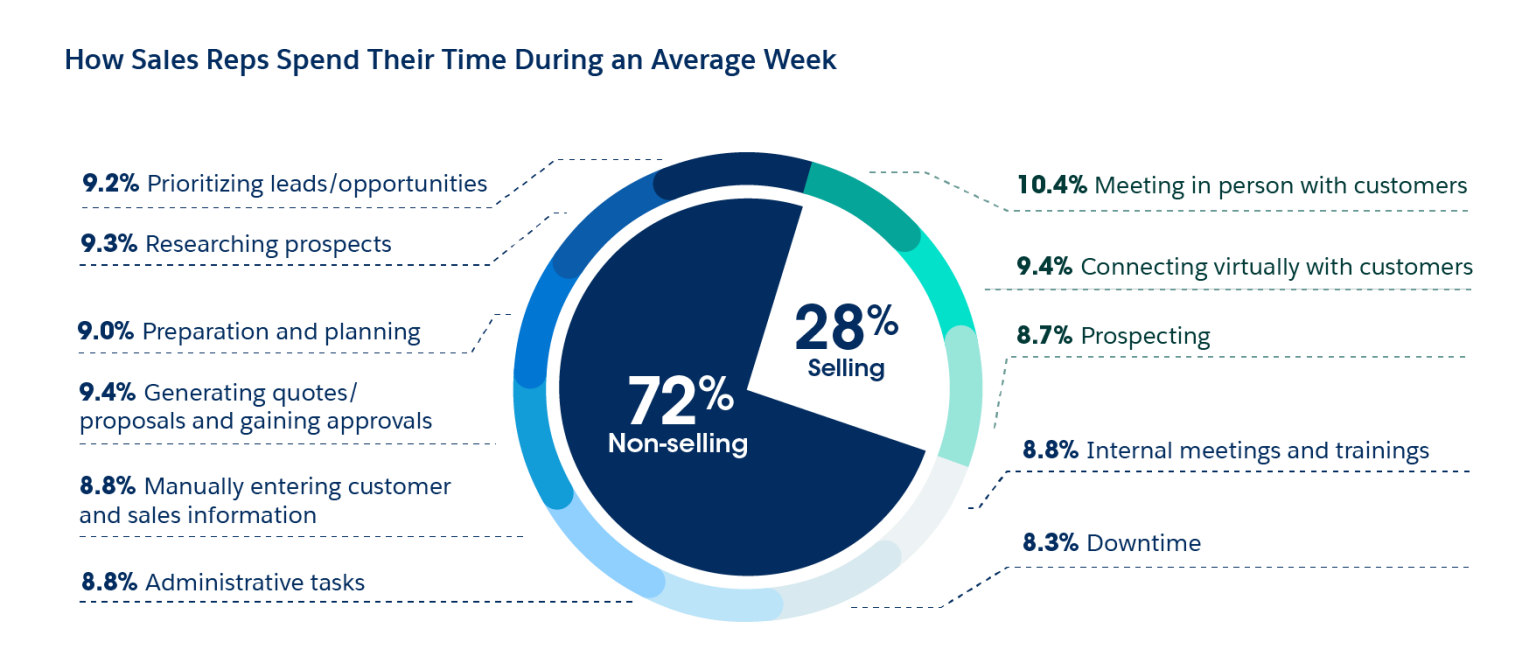
Salesforce’s State of Sales research shows that sales reps spend only about 28% of their time selling, with the bulk of their week taken up by CRM updates, admin tasks, and internal work, highlighting the need for clearer engagement signals in activity tracking.
To reduce this strain, some teams use tools such as MassMailer to make email engagement data visible within Salesforce records and reporting, without changing core workflows. In the next section, we look at what Salesforce activity tracking captures reliably and what it consistently misses.
What Salesforce Activity Tracking Actually Captures (And What It Does Not)
Salesforce activity tracking records sales actions accurately, but it does not capture buyer engagement depth by default. It shows what sales teams do inside the CRM, but it does not explain how buyers react to those actions. Because of this gap, activity data can look complete while still lacking decision-level meaning.
1. Sales Activities That Salesforce Reliably Tracks
Salesforce activity tracking reliably records sales actions that happen inside CRM workflows. These records help teams confirm execution, timing, and follow-up discipline across accounts.
Salesforce activity tracking consistently captures the following sales activities:
- It logs phone calls and call outcomes against the correct records.
- Records scheduled and completed meetings automatically.
- Tracks tasks, reminders, and follow-up actions reliably.
- Marks sent emails as completed CRM activities.
Because these actions sync consistently, teams can trust Salesforce for operational tracking, including basic email logging against lead and contact records. Some teams build on this foundation using tools like MassMailer to add visibility into email opens and clicks alongside logged email activity.
2. Email Engagement Salesforce Does Not Track
Salesforce does not natively treat email engagement as part of activity tracking. It records that an email was sent, but it does not add engagement behaviour to the activity timeline.
Salesforce activity tracking does not natively capture the following engagement signals:
- Salesforce does not confirm whether a buyer opened or read an email.
- Salesforce does not show which links a buyer clicked inside an email.
- Salesforce does not track engagement patterns across multiple emails.
- Salesforce does not surface behavioural intent from email interactions.
Because of this, email engagement data often sits outside Salesforce activity views. Some teams use MassMailer’s Salesforce-based email campaigns to track opens and link clicks and report that data alongside CRM activity.
3. How Salesforce Activity Data Gets Misread
Salesforce activity tracking focuses on execution, which often leads teams to misread activity data during reviews. These misreads happen when logged actions are treated as signs of buyer interest.
Common Salesforce activity tracking misinterpretations include:
- Teams assume a recorded email means the buyer engaged with it.
- Teams treat high activity volume as proof of buyer intent.
- Teams prioritise follow-ups based on timing instead of engagement.
- Teams judge pipeline health using activity counts alone.
Over time, these assumptions reduce sales focus and slow deal progress. Some teams rely on MassMailer to supplement Salesforce activity data with email open rates and click visibility during pipeline reviews.
In the next section, we explain how teams close these engagement gaps without replacing Salesforce and turn activity data into clearer sales signals.
Closing Salesforce Activity Tracking Gaps
Salesforce activity tracking gaps can be closed without replacing Salesforce by using email engagement data in a clearer way. When teams connect engagement data with CRM activity, sales actions become easier to review. As a result, follow-up decisions rely on real signals instead of assumptions.
1. Treating Email Engagement as a Sales Signal
Email engagement helps only when teams treat it as a sales signal, not just a metric. Opens and clicks show interest when viewed alongside calls, tasks, and meetings.
Teams improve results when they:
- Check email opens before sending follow-ups
- Use link clicks to spot stronger interest
- Review engagement during account reviews
- Avoid follow-ups based only on send dates
This approach helps reps contact buyers at the right time. It also improves response quality and reduces wasted outreach.
2. Adding Engagement Context to Salesforce Activities
Activity data becomes clearer when engagement appears next to logged actions. When reps can see email opens and clicks near calls and tasks, reviews become faster and more accurate.
Teams usually add this context by:
- Viewing email engagement on lead and contact records
- Reviewing campaign performance with activity history
- Checking engagement before pipeline updates
UMass Boston uses MassMailer for Salesforce to manage high-volume student communications while keeping all email activity visible inside Salesforce records. By tracking email sends and engagement within Salesforce, advisors can review outreach history alongside tasks and meetings without switching tools.
This centralized activity view helps teams prioritize follow-ups more accurately and maintain consistent communication workflows as outreach scales.
3. Aligning Sales and RevOps Activity Data
Sales and RevOps alignment improves when both teams use the same activity and engagement data. Clear definitions help avoid confusion during reviews and reporting.
Teams align more easily when they:
- Agree on which engagement metrics matter
- Use shared activity and campaign reports
- Review engagement trends during pipeline meetings
For RevOps teams, the email deliverability guide from MassMailer helps explain how inbox placement and sending quality affect the engagement data used in Salesforce reports. This shared understanding improves data trust over time.
In the next section, we’ll look at when it makes sense to enhance Salesforce activity tracking and how teams decide if added engagement visibility is needed.
When It Makes Sense to Enhance Salesforce Activity Tracking
It makes sense to enhance Salesforce activity tracking when logged activity no longer explains buyer response. As outbound volume grows, teams need more than task completion to guide follow-ups. At this stage, added engagement visibility helps sales and RevOps act with more clarity.
Teams usually reach this point when:
- Email activity increases, but replies and meetings do not
- Reps struggle to decide who to follow up with first
- Pipeline reviews rely on activity counts instead of engagement
- Managers question whether outreach is working
- RevOps reports lack trusted engagement signals
Because Salesforce activity tracking focuses on actions taken rather than reactions received, these gaps become more visible as scale increases. As a result, teams spend more time reviewing records and less time moving deals forward.
At this stage, MassMailer’s workflow automation guide helps teams to understand how automation affects follow-ups and activity quality.
Conclusion
Salesforce activity tracking shows what teams do, but it does not always show how buyers respond. As outreach scales, activity volume alone stops guiding follow-ups and reviews. At that point, teams need engagement visibility to decide where to focus.
Strong teams do not replace Salesforce. They make email engagement visible inside the CRM so reviews are quicker, reports are clearer, and follow-ups are easier to prioritise.
If your Salesforce activity data feels complete but still unclear, it may be time to add engagement signals. MassMailer helps teams view email opens, clicks, and campaign results alongside Salesforce activity data.
See how this works in practice. Explore MassMailer or start a free trial to evaluate clearer activity tracking in Salesforce.
Start Your Free Trial Today
Experience MassMailer the easiest way to send personalized emails from Salesforce.
Related Blogs
A Step-by-Step Guide to Email Alerts in Salesforce
Salesforce Flow Email Alert: Setup, Tracking, and Best Practices
MassMailer Resources



MassMailer Glossary
About the Author

Siva Devaki 

Siva Devaki is the founder of MassMailer Inc., a tool that helps Salesforce users optimize email marketing. A passionate advocate for email marketing, Siva writes and hosts podcasts on the topic, sharing insights to help businesses drive revenue and enhance customer engagement through Salesforce email automation and tracking.