
About Salesforce Drip Campaign
Salesforce drip campaigns automate multi-touch email communication, delivering targeted messages over days or weeks based on prospect behavior, stage transitions, or time-based triggers. Rather than sending one-off emails, drip campaigns systematically nurture relationships through carefully sequenced content designed to move recipients toward specific goals—demo requests, purchases, renewals, or engagement reactivation.
How Salesforce Drip Campaigns Work
Drip campaigns trigger when leads or contacts meet specific criteria: form submission, opportunity stage change, lead score threshold, inactivity period, or campaign membership. The system automatically sends the first email, waits for a specified interval (hours, days, weeks), evaluates engagement (opens, clicks), and sends subsequent emails based on a predetermined sequence or behavioral responses. Native automation within Salesforce enables sophisticated drip logic without external platforms.
Common Drip Campaign Use Cases
Lead Nurturing Sequences: New leads receive educational content introducing products/services, addressing common objections, and establishing credibility over 5-7 touch points spanning 2-4 weeks. Financial advisors use drip campaigns to educate prospects on retirement planning concepts before scheduling consultations, increasing qualified meeting conversions.
Customer Onboarding: New customers receive sequential welcome emails, product tutorials, feature highlights, and support resources over the first 30-60 days. Educational institutions deploy drip campaigns orienting new students to campus resources, academic requirements, and key deadlines throughout enrollment periods.
Re-engagement Campaigns: Dormant contacts receive 3-5 emails over 10-14 days highlighting new offerings, requesting feedback, or offering incentives to restart engagement. Membership organizations use drip campaigns to re-activate inactive members with class schedules, facility updates, and limited-time promotions.
Event Follow-Up: Conference attendees receive post-event drip sequences sharing session recordings, speaker resources, feedback requests, and next-step calls-to-action over 7-10 days. Event organizers leverage drip campaigns to maintain attendee engagement between quarterly conferences.
Implementation Approaches
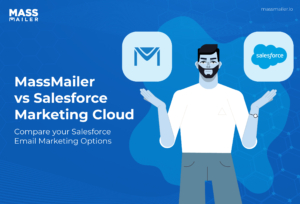
Native Salesforce Tools: Salesforce Flow Builder enables basic drip logic—triggering emails based on field updates or stage changes. Marketing Cloud Account Engagement (Pardot) provides sophisticated drip functionality but requires a $15,000-$50,000+ annual investment and a dedicated administrator. Native email solutions like MassMailer deliver drip campaign capabilities within the Salesforce environment at a fraction of the Pardot investment without external platform complexity.
External Marketing Automation Platforms: HubSpot, Marketo, and ActiveCampaign offer visual workflow builders for complex drip sequences. However, integration with Salesforce requires sync management, creating delays between trigger events in CRM and email execution in the external platform. Behavioral tracking fragments across systems—Salesforce captures CRM activity while ESP tracks email engagement.
Simplified ESPs: Mailchimp, Constant Contact, Campaign Monitor provide basic automation but limited drip sophistication. Automation triggers based on ESP-side events (list subscription, previous email engagement) rather than Salesforce CRM data (opportunity stage, lead score, account value). Organizations discover ESP automation insufficient for CRM-driven drip requirements.
University of San Andrés implements drip campaigns for prospective student nurturing—delivering campus information, program details, application guidance, and financial aid resources over 8-week sequences based on inquiry source and program interest captured in Salesforce. Native email automation enables personalized drip sequences without an external marketing automation platform investment.
Key Takeaways
- Salesforce drip campaigns automate multi-touch email sequences, delivering targeted messages based on triggers, time intervals, or behavioral actions within CRM.
- Common use cases include lead nurturing, customer onboarding, re-engagement, event follow-up sequences spanning days or weeks with 3-7 touch points.
- Implementation options span native Salesforce tools (Salesforce Flow Builder, Pardot), external marketing automation (HubSpot, Marketo), and native email solutions.
- External ESP integration creates sync delays between CRM trigger events and email execution, fragmenting behavioral tracking across platforms.
- Effective drip campaigns require strategic planning—clear goals, journey mapping, valuable content, appropriate intervals, and behavioral branching.
Build sophisticated drip campaigns within Salesforce—no external marketing automation platform required. MassMailer provides visual workflow builders, behavioral triggers, and engagement tracking natively in your CRM.